
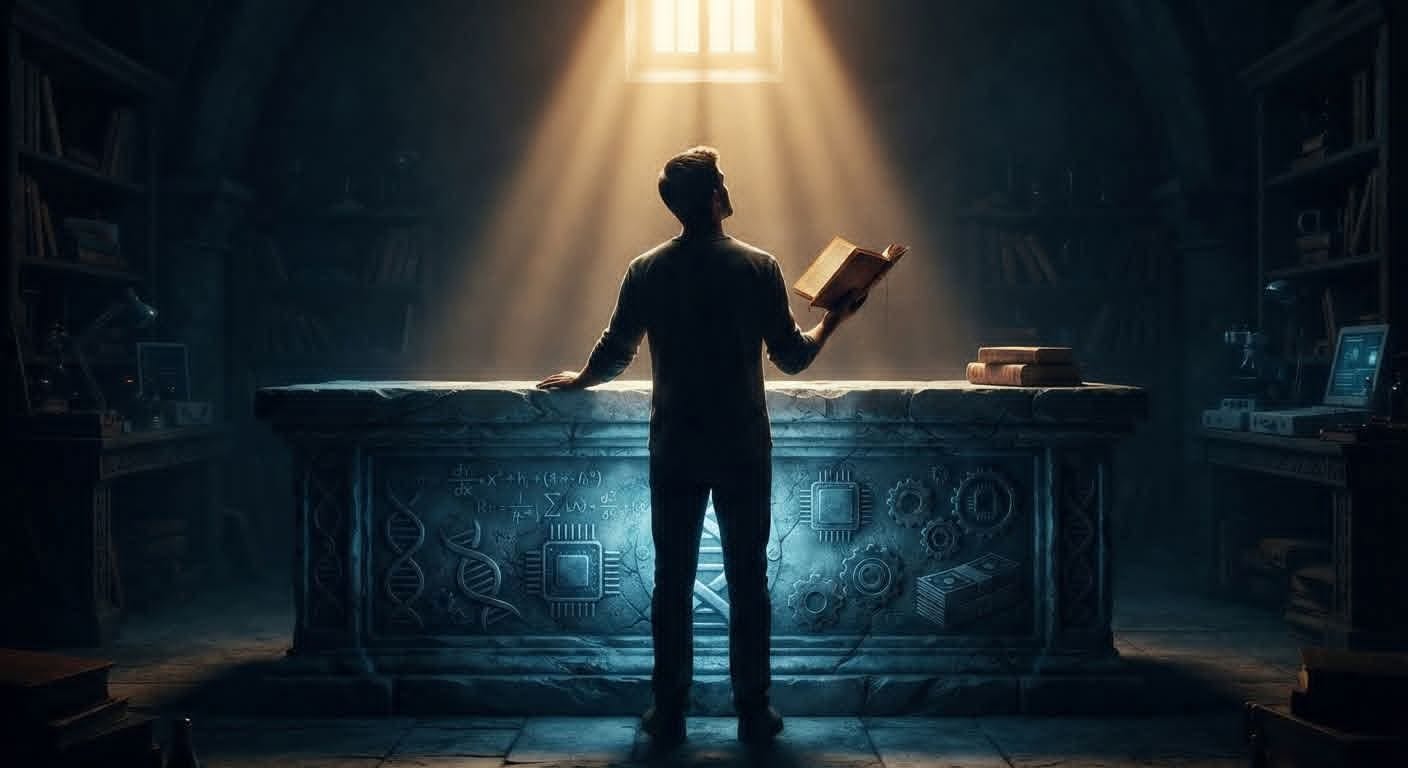
Athens had an altar for a God it did not know.
Paul found it among the objects of worship in a city full of them. He had been speaking in the synagogue and the marketplace, where some philosophers dismissed him as a babbler. Others wanted to hear more about Jesus and the resurrection. They brought him to the Areopagus, and Paul began with something he had seen while walking through their city.
The altar bore an inscription: TO THE UNKNOWN GOD.
Their handiwork had supplied a place for what their knowledge had not supplied a name.
Paul spoke of the God who made the world and everything in it. The Lord of heaven and earth could not be housed as though a temple contained Him. Human hands could not supply His needs. The people bringing their offerings were themselves receiving life and breath from Him.
The worshipers had the direction of dependence backward.
A craftsman could shape stone into an impressive figure. He could polish it, place it on a pedestal, and stand before it with great ceremony. None of that made the stone responsible for the craftsman’s next breath.
Paul’s words reached beyond the things Athens had built. God had made the nations and established the times and boundaries of their habitation. Human life unfolded within a world people had not brought into existence. They could seek its Maker, who was not far from them.
Even their own poets had given Paul words he could use. He did not have to pretend that everyone outside his faith had never noticed anything true. He took what they recognized and carried the conversation further: beings who owed their existence to God should not imagine Him as something their own hands could manufacture.
The creature could make an image. He could not make his Creator.
The old stone figures are not required for that confusion to survive. A person can become so impressed with what human intelligence discovers that he begins treating human intelligence as the final boundary of reality. Whatever fits inside that boundary is admitted. Whatever does not is dismissed.
Science can describe remarkable things about the world. Those discoveries need not diminish reverence for its Maker. Learning how something works does not, by itself, establish that no one made it. The trouble begins when an explanation of a process is asked to carry a much larger claim: that physical reality is all there is.
That conclusion reaches beyond describing what was observed.
People arrive at these questions from different places. One may deliberately reject a Creator. Another may be wrestling with doubt, sorting through conflicting claims, or trying to make sense of something painful. Someone else may barely have considered the question. A confident dismissal and an honest admission of uncertainty are not the same answer, and neither gives us permission to invent the private motives behind it.
Paul’s listeners did not all respond alike, either.
When he spoke of the resurrection, some mocked. Others said they would hear him again. Some believed, including Dionysius and Damaris. The same message reached people who gave different answers.
Paul had not offered them a new curiosity to add to the collection. He spoke of repentance and a day God had appointed to judge the world through the One He had raised from the dead. Their response mattered, but their response did not give them authority to appoint a different Judge or cancel the day.
The God who supplied their breath had also spoken about what they did with it.
Paul departed from among them. He had neither forced agreement nor trimmed the message until everyone could approve it. Some met the resurrection with a laugh. Others wanted another hearing. Some followed in faith.
The people who believed had heard more than a new explanation for an old altar. Paul had introduced them to the living God—the Maker of the stone, the sculptor, and everyone who stopped to admire the work.
The people of Athens had spent their lives surrounded by objects shaped by human hands, objects they were taught to worship. Now, those who believed Paul’s message were coming to know the living God—the very source of their own life and breath.
“Know ye that the LORD he is God: it is he that hath made us, and not we ourselves; we are his people, and the sheep of his pasture.” —Psalm 100:3
—Jeff Wager
#WagerEssays #TheEssayDepot #WhatGodSays #Apologetics #Theology