
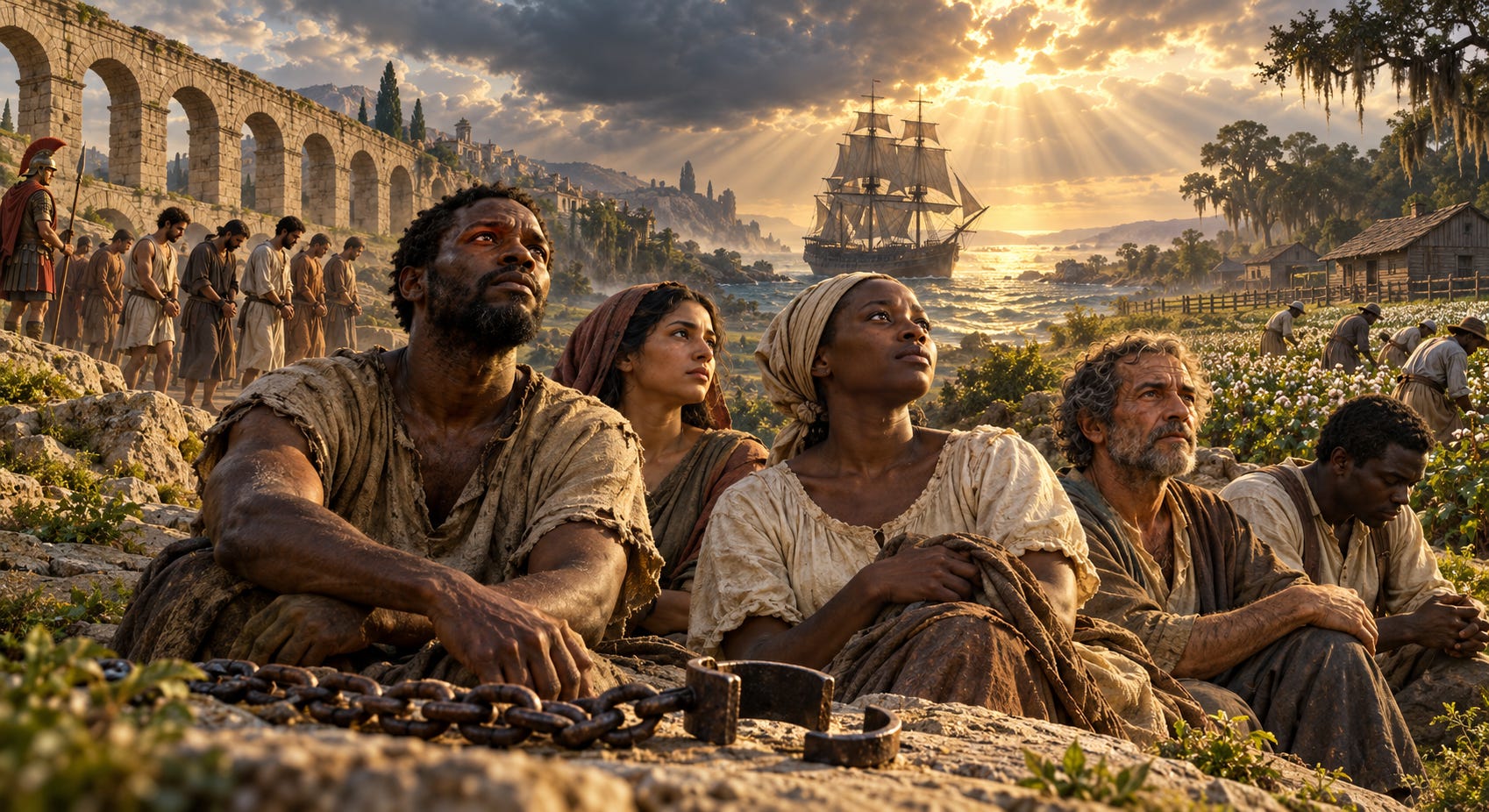
Slavery did not begin in America, and no single race invented it.
Long before slave ships crossed the Atlantic, captives were already walking behind conquerors. Some had lost a war. Some had been kidnapped. Others entered bondage through debt, punishment, or birth. The languages changed from kingdom to kingdom. The sound of chains needed no translation.
Rome drew enslaved people from Europe, North Africa, and the Middle East. African kingdoms enslaved other Africans. Muslim empires held Europeans, Asians, and Africans. Slavery also existed across Asian societies. Captor and captive could come from neighboring communities and look much alike.
The modern color line did not create the human appetite for power over another person. It gave that appetite another excuse.
The Atlantic trade carried the horror across an ocean. European traders bought captives supplied through African trading networks, including rulers and merchants who profited from warfare, raids, and human sales. Buyers, sellers, shipowners, and colonial authorities built a business around people who had no say in the bargain.
Someone counted the money. Someone else wore the chains.
The ships did not all sail toward what became the United States. Most Africans who survived the crossing were taken to Brazil and the Caribbean. Estimates drawn from the voyage records place direct arrivals in mainland North America at roughly four percent of those who survived the Atlantic passage.
The United States was part of that history. It was never the whole map.
That figure counts people brought across the Atlantic. It does not count the generations subsequently born into slavery. By 1860, nearly four million people were enslaved in the United States. Colonial and American laws had made bondage hereditary, passing the mother’s enslaved status to her children.
A child could enter the world already claimed by someone else, beneath laws written by people who called themselves civilized.
The smaller share of direct Atlantic arrivals does not make American slavery harmless. The larger numbers carried elsewhere do not make those people background scenery. Brazil, the Caribbean, and the United States each have histories that deserve to be told accurately.
Pain is not a contest.
A Roman captive does not cancel an African captive. A European chained to a galley does not erase a Black child born on an American plantation. Remembering one grieving mother does not require forgetting another. Every captive had a life larger than the price someone placed upon it.
There were families behind those numbers: familiar voices, homes, skills, hopes, and names. A buyer might see a strong back or a useful pair of hands. God saw the person.
The historical systems differed. Their laws, conditions, and paths to freedom were not identical. Their differences matter because truth matters. Cruelty needs no exaggeration to become cruel.
Scripture requires the same care. Leviticus 25 permitted Israelites to purchase foreign slaves and pass them to their children as possessions. Exodus 21 condemned stealing a person and selling him. Both belong to the biblical record. Those ancient permissions cannot honestly be erased. Neither can they become a blank check for later nations to kidnap people, invent racial inferiority, or excuse brutality.
Paul reminded masters that they too had a Master in heaven, and that He showed no favoritism. A man’s earthly position did not place him beyond God’s authority.
A law could recognize his ownership. It could not make him God.
Across the centuries, people used power for choices that others were forced to endure. Rulers authorized raids. Merchants arranged sales. Captains packed ships. Buyers inspected people as merchandise. Officials protected profitable systems.
Their decisions were real, but their authority had limits. God saw what happened beneath every flag. His sovereignty never turned human cruelty into holiness. He could permit what He condemned without approving it or surrendering His right to judge it. Neither a crown nor a government seal could purchase immunity before Him.
The abolition of legal slavery brought freedom worth celebrating. Thank God for every chain broken and every family released from another person’s claim. The damage did not disappear when the laws changed, though. Freedom could open a door without restoring the years stolen behind it.
A broken chain matters. The person who wore it matters more.
Jesus Christ reaches deeper still. Earthly freedom releases a person from another human being’s ownership. Christ frees people from bondage to sin—the greed, hatred, pride, and hunger for power that can survive after the iron is gone.
His mercy calls the wrongdoer to repentance and offers hope to the wounded. Forgiveness never requires us to pretend the suffering did not happen.
The history crosses nations and colors, and the suffering deserves remembrance wherever it occurred. Every person answers to God for what they chose to do.
No earthly master gets the final word.
“If the Son therefore shall make you free, ye shall be free indeed.” —John 8:36
—Jeff Wager
#WagerEssays #TheEssayDepot #WhatGodSays #Apologetics #Theology