
The objection reaches across the calendar.
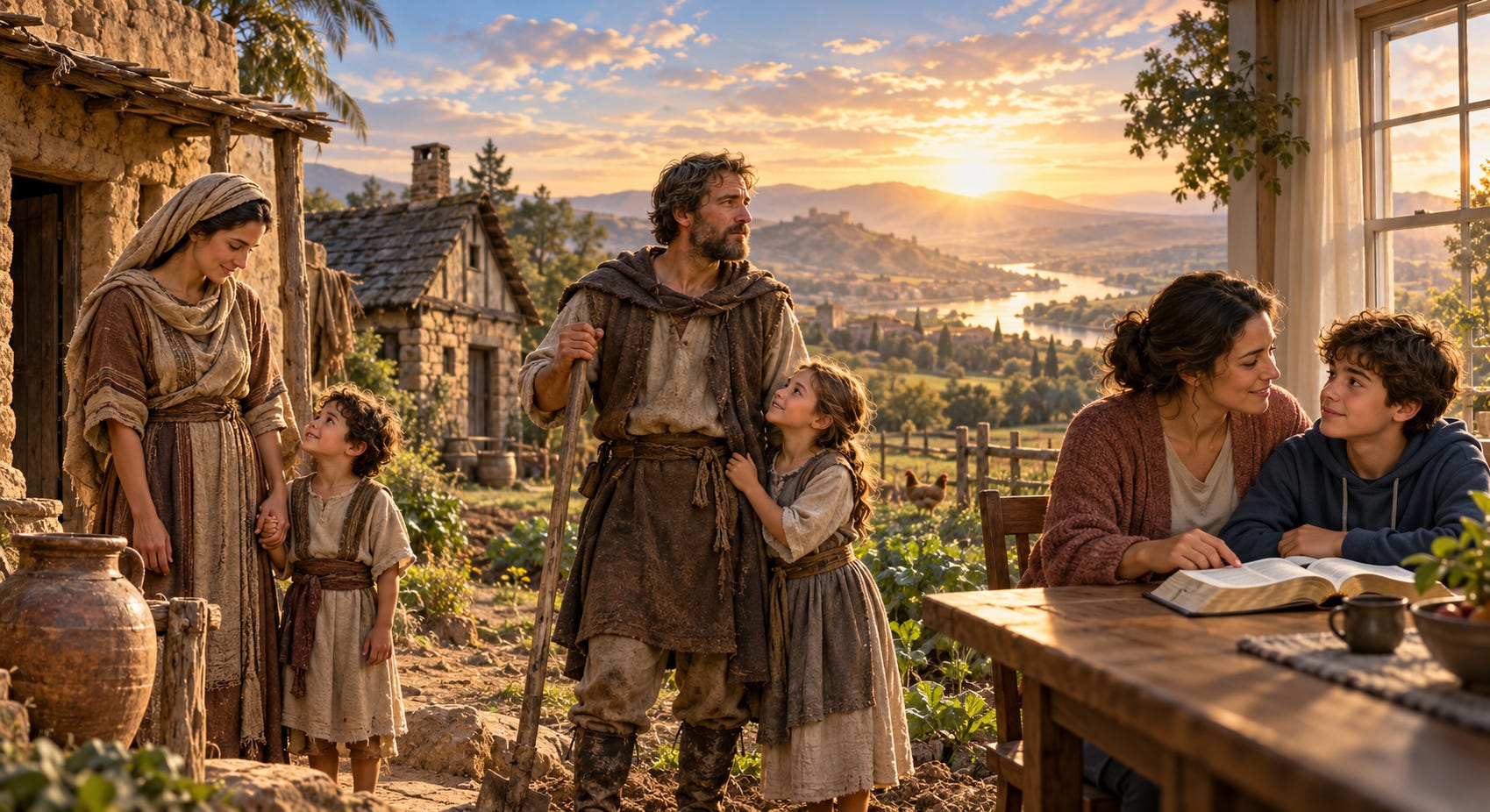
No one chooses the century, country, family, culture, or religious climate into which he is born. Some people enter history surrounded by Scripture, education, safety, and freedom. Others are born amid war, slavery, disease, persecution, corruption, or generations that have barely heard the name of Christ.
How can God judge people justly when their starting places are so different?
Why was one person born after the gospel had traveled across continents while another lived centuries before the cross? Why does one child grow up hearing about mercy while another is taught cruelty as though it were righteousness?
Those differences are real.
We cannot honestly say that every person receives the same knowledge, opportunities, protection, or earthly circumstances.
They do not.
Scripture itself records people living under vastly different conditions. Abraham did not possess the completed Bible. Moses knew truths Abraham had never been shown. David understood things revealed after Moses. The apostles witnessed Christ in the flesh, while later believers trusted their testimony without seeing Him with their own eyes.
God revealed His plan across time rather than handing every generation the same completed page, yet salvation was never earned by possessing more information than someone else.
Abraham believed God. The faithful trusted the truth God had revealed to them. Their confidence ultimately rested upon the same saving work of Christ, even when they could not yet see the cross as clearly as people standing on the other side of it.
Jesus Christ is not merely the Savior of people fortunate enough to be born after Bethlehem.
His work reaches across the ages.
That does not answer every question about each person who lived and died with limited knowledge. Scripture does not give us the private history of every heart, and we should not manufacture an answer merely because uncertainty makes us uncomfortable.
We do know several things clearly.
God possesses complete knowledge of every person.
He knows what each person was taught, what each person understood, what each person resisted, and what each person never had an opportunity to hear. He knows the pressure of family, government, fear, poverty, tradition, trauma, and deception. No human life appears before Him as a thin folder with half the pages missing.
God never judges from incomplete evidence.
A human court may condemn the innocent because a witness lied or a fact remained hidden. God cannot be fooled by appearances, bribed by power, confused by culture, or surprised by information discovered too late.
His judgment is personal and exact.
That does not mean ignorance automatically makes everyone innocent. Human beings still possess conscience, encounter evidence of God through creation, and make genuine moral choices with the truth available to them. Neither does greater knowledge automatically make someone faithful. People surrounded by Bibles may reject the truth more stubbornly than those who received far less.
Greater light brings greater responsibility.
A person who knows more has more to answer for—not more reason to boast.
This is where the accusation of chronological favoritism begins to break down. Favoritism would mean God bends His judgment for preferred people while treating others with prejudice. Scripture teaches the opposite. God is not impressed by birthplace, century, wealth, ancestry, education, or religious vocabulary.
He sees the heart without distortion.
Still, we should not pretend that every historical setting was equally gentle. Some generations endured horrors most of us can scarcely imagine. Their suffering does not prove they were weaker, more sinful, or selected because God knew they were tougher.
We do not know why God assigned a particular soul to a particular hour.
Esther was told that she may have come to her position “for such a time as this.” That statement concerned a specific woman facing a specific decision. It teaches us that our present position carries responsibility. It does not permit us to announce that every victim of history was hand-picked because God trusted that person to withstand extraordinary suffering.
Sometimes people did not withstand it.
Some were crushed.
God saw them too.
The proper response to our place in history is not pride over people born in another era. It is responsibility for the light placed in our hands now. We did not choose our century, but we choose what we do inside it.
We cannot rewrite the past or live another person’s life. We can tell the truth today. We can protect someone today. We can reject cruelty today. We can receive mercy and extend it today.
The calendar establishes our setting.
It does not make our decision for us.
The three pillars remain standing.
God is sovereign: He determined the times and boundaries of human history, and no century falls outside His authority.
Human agency is bounded: people make real choices within unequal circumstances that God understands perfectly, but no one controls the age, nation, or conditions of his birth.
The verdict is settled: God has already declared the end of faith and rebellion, and He will apply that verdict with complete knowledge and without partiality.
We do not need to claim that history treated everyone equally.
It plainly did not.
We trust that the Judge sees every inequality, knows every heart, and will never mistake privilege for faithfulness or suffering for guilt.
No one chose when to enter history.
Everyone answers for what he does after arriving.
“And hath made of one blood all nations of men for to dwell on all the face of the earth, and hath determined the times before appointed, and the bounds of their habitation; That they should seek the Lord.” —Acts 17:26–27
—Jeff Wager
#WagerEssays #TheEssayDepot #WhatGodSays #Apologetics #Theology