
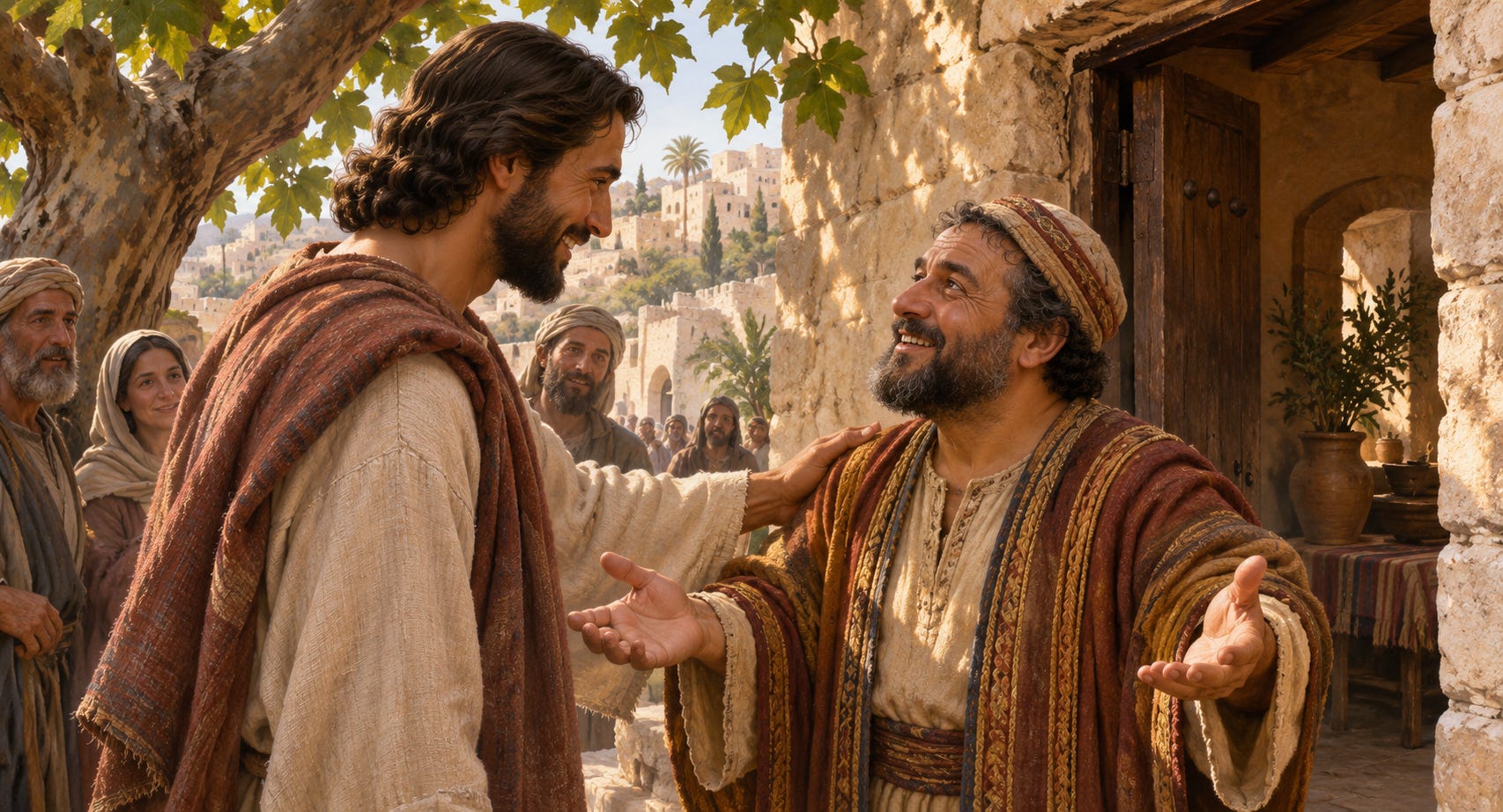
Zacchaeus wanted to see Jesus, but the crowd stood in his way. He was a rich man and a chief tax collector. He was also short enough that seeing over everyone’s shoulders required a different arrangement.
He ran ahead and climbed a sycamore tree.
Jesus stopped beneath it, called him by name, and told him to come down. He would stay at Zacchaeus’s house that day. Zacchaeus hurried down and received Him joyfully while the people complained that Jesus had gone to be the guest of a sinner.
Then the conversation reached the money.
Zacchaeus stood before the Lord and spoke of giving half his goods to the poor. If he had taken anything through false accusation, he would restore it fourfold.
The man who had climbed a tree to see Jesus was speaking about what would leave his own hands.
Jesus declared that salvation had come to that house. He said He had come to seek and save the lost. Zacchaeus’s money could not purchase that rescue. His words about generosity and restitution showed faith reaching into the very part of life where money had mattered so much.
Grace had reached farther than the front door.
James places another scene before his readers: a brother or sister lacks clothing and daily food. Someone sends that person away with peaceful words about being warm and filled, yet supplies nothing the body needs.
The words sound generous. The person leaves hungry.
James exposes the emptiness of a claimed faith that never reaches toward the need before it. He speaks of showing faith through works and reminds his readers that even devils believe there is one God and tremble. Knowing a fact about God is not the same as trusting Him.
A claim can be spoken without being lived.
Paul describes salvation as God’s gift, received through faith rather than earned through works. In the same passage, he describes believers as God’s workmanship, created in Christ Jesus for good works.
The order matters. The gift comes from God. The good that follows belongs to the life He gives.
Fruit does not create the tree’s life. It grows from it.
That leaves no room for buying salvation with a stack of good deeds. It also leaves no reason to treat obedience as an unwelcome interruption to faith. Mercy reaches into ordinary decisions: the truthful answer that costs something, the help offered without an audience, the apology that stops defending itself halfway through.
Growth can be uneven. Believers still stumble, resist correction, and sometimes leave damage that must be faced honestly. A difficult season cannot be understood merely by counting outward achievements, and a polished reputation cannot reveal everything within a heart.
God sees what we miss.
The struggling believer’s hope rests in Christ, rather than in the ability to produce enough visible progress to feel safe. The same Savior who forgives also calls His people to follow Him. Returning to Him makes room for confession, correction, and another faithful step.
Zacchaeus did not announce a spotless history. He spoke about generosity and putting wrongs right. The crowd had seen a sinner receive Jesus into his house. Now the story included the poor and anyone he had wronged.
The welcome had consequences for the way he would live.
His changed conduct could not take the Savior’s place. It showed why receiving the Savior mattered.
“Even so faith, if it hath not works, is dead, being alone.” —James 2:17
—Jeff Wager
#WagerEssays #TheEssayDepot #WhatGodSays #Apologetics #Theology