
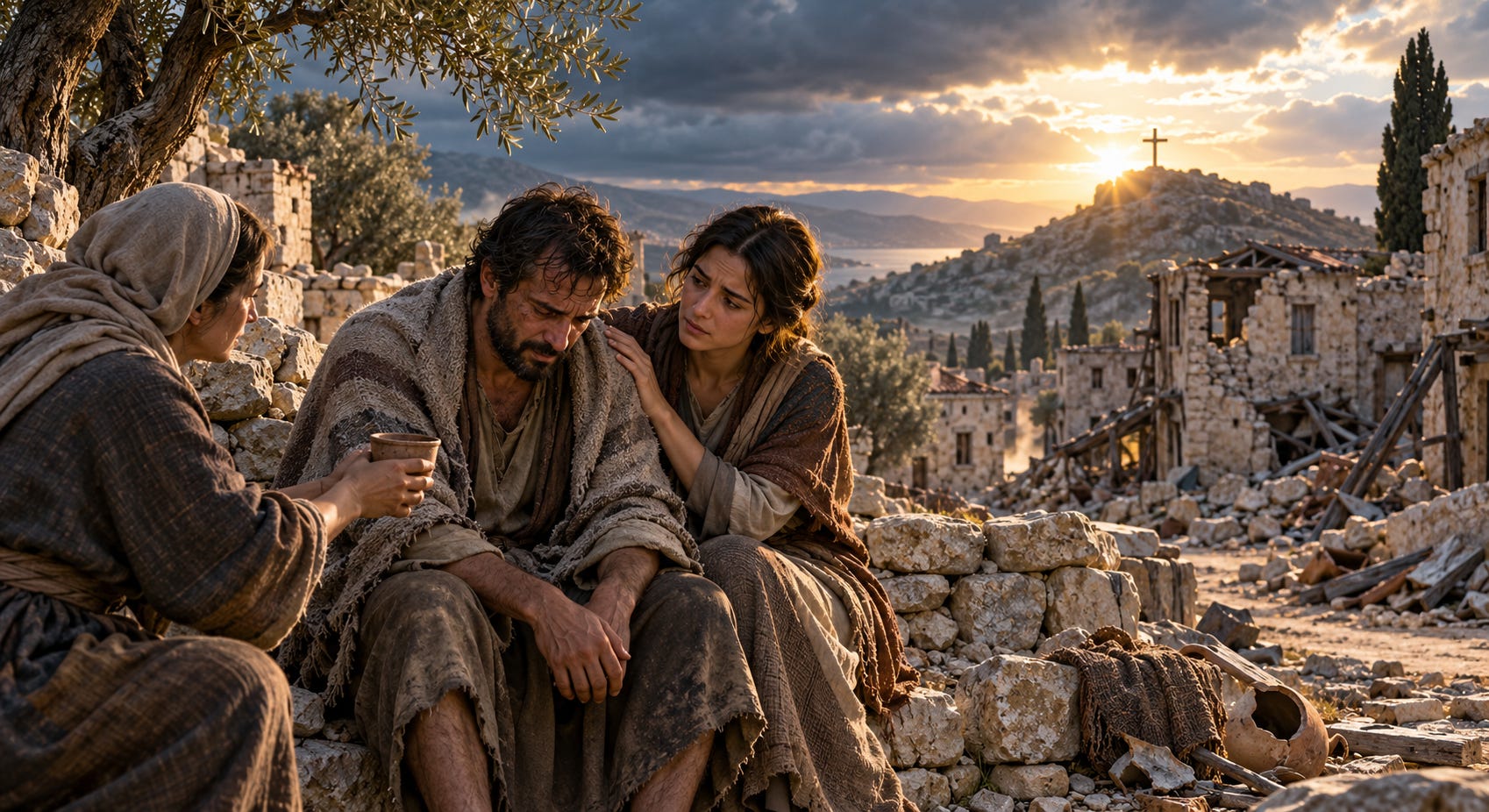
The objection is not difficult to understand: If God is loving and all-powerful, why has He allowed so much suffering? Why genocide, disease, starvation, abuse, and graves filled with people who died too soon? If hardship teaches us anything, why could the lesson not have been learned through a scraped knee instead of a slaughtered nation?
That is not a foolish question. Anyone who has watched someone suffer may ask it. It deserves an honest answer—not an insult.
The System of Divine Contrast does not require us to pretend that evil is harmless or that suffering is merely a teaching prop. Genocide is evil. Abuse is evil. Disease hurts. Grief can knock the breath out of a person. The Bible never asks us to call darkness light merely because God can bring something good from it.
God created human beings with genuine freedom. That freedom is real enough to love, obey, sacrifice, and forgive. It is also real enough to hate, betray, enslave, and murder. Much of history’s suffering came through human hands exercising the very agency critics insist must be real.
That does not explain every tear. A sick child did not choose the disease. A family buried beneath an earthquake did not vote for the ground to move. Scripture says the whole creation groans beneath the damage of a fallen world. We must never blame every sufferer for the suffering that reached them.
God’s sovereignty does not mean everything that happens is good. It means evil never becomes an independent ruler. God may permit what He hates without approving it, and He can turn what was meant for destruction toward a purpose its author never intended.
Joseph’s brothers sold him into slavery. Their act remained wicked, and they remained responsible, yet God used their evil choice to preserve lives during a famine. Their freedom was real. Their guilt was real. God’s authority remained greater than both.
Why did God permit that particular evil? Why did He allow one tragedy but prevent another? Scripture does not hand us a complete map. Anyone claiming to know God’s precise reason for every grave, illness, war, or shattered home is claiming knowledge God has not given.
What Scripture does reveal is enough to set firm boundaries around the question. God sees every injustice. He hears the cries of the suffering. He holds evildoers accountable. He can redeem what people meant for evil. He entered human suffering through Jesus Christ, carried its wounds in His own body, conquered death, and promised that pain will not have the final word.
This is where the three pillars remain standing.
God is sovereign: suffering cannot overthrow His final purpose.
Human agency is bounded: people may choose evil, but they cannot escape the verdict God has already attached to it.
The verdict is settled: rebellion leads to death, while life is offered through faith in Jesus Christ.
The Christian answer is not that human suffering is small. It is that God is greater. He did not watch our pain from a safe distance. He entered it, bore its scars, and opened a road through death itself.
We may not know why God permitted every wound, but we know what He will finally do with pain, death, and every power that caused them.
He will bring them to an end.
“And God shall wipe away all tears from their eyes; and there shall be no more death, neither sorrow, nor crying, neither shall there be any more pain: for the former things are passed away.” —Revelation 21:4
—Jeff Wager
#WagerEssays #TheEssayDepot #WhatGodSays #Apologetics #Theology