
The objection is practical:
If God is sovereign and His final purpose cannot fail, why should anyone do anything?
Why pray if God already knows what He will do? Why preach if He already knows who will believe? Why help the suffering if history remains under His control? Why resist evil if Christ’s victory is guaranteed?
Taken carelessly, divine sovereignty can become a comfortable chair for people who would rather watch than obey.
They call their inaction trust.
It is often only laziness wearing a religious coat.
Scripture never presents God’s sovereignty as an excuse for human complacency. The God who declares the destination also commands the steps taken along the road. He promises harvests, then sends farmers into fields. He provides daily bread, then tells people to work. He gives wisdom, then commands us to seek it. He builds His church, then sends disciples to preach the gospel.
God ordinarily accomplishes His purposes through means.
When God warned Noah about the flood, Noah did not sit beneath a tree and say, “If God intends to save my family, He will handle it.” He built the ark.
When Joseph learned that famine was coming, he did not shrug because God controlled Egypt. He stored grain.
When Nehemiah trusted God to protect Jerusalem, the people still rebuilt the wall and kept watch against attack.
When Paul preached the gospel, he understood that neither his labor nor another man’s labor could create spiritual life. He planted. Apollos watered. God gave the increase.
God’s power did not make their work useless.
It made their work fruitful.
The critic is correct about one danger: people can misuse sovereignty to excuse neglect. A person may walk past someone in need and say, “God will provide.” A church may refuse to confront abuse and say, “God is in control.” A believer may avoid prayer, discipline, generosity, or witness because the final outcome rests in God’s hands.
Those statements may sound faithful while covering disobedience.
God’s control is never permission to ignore God’s commands.
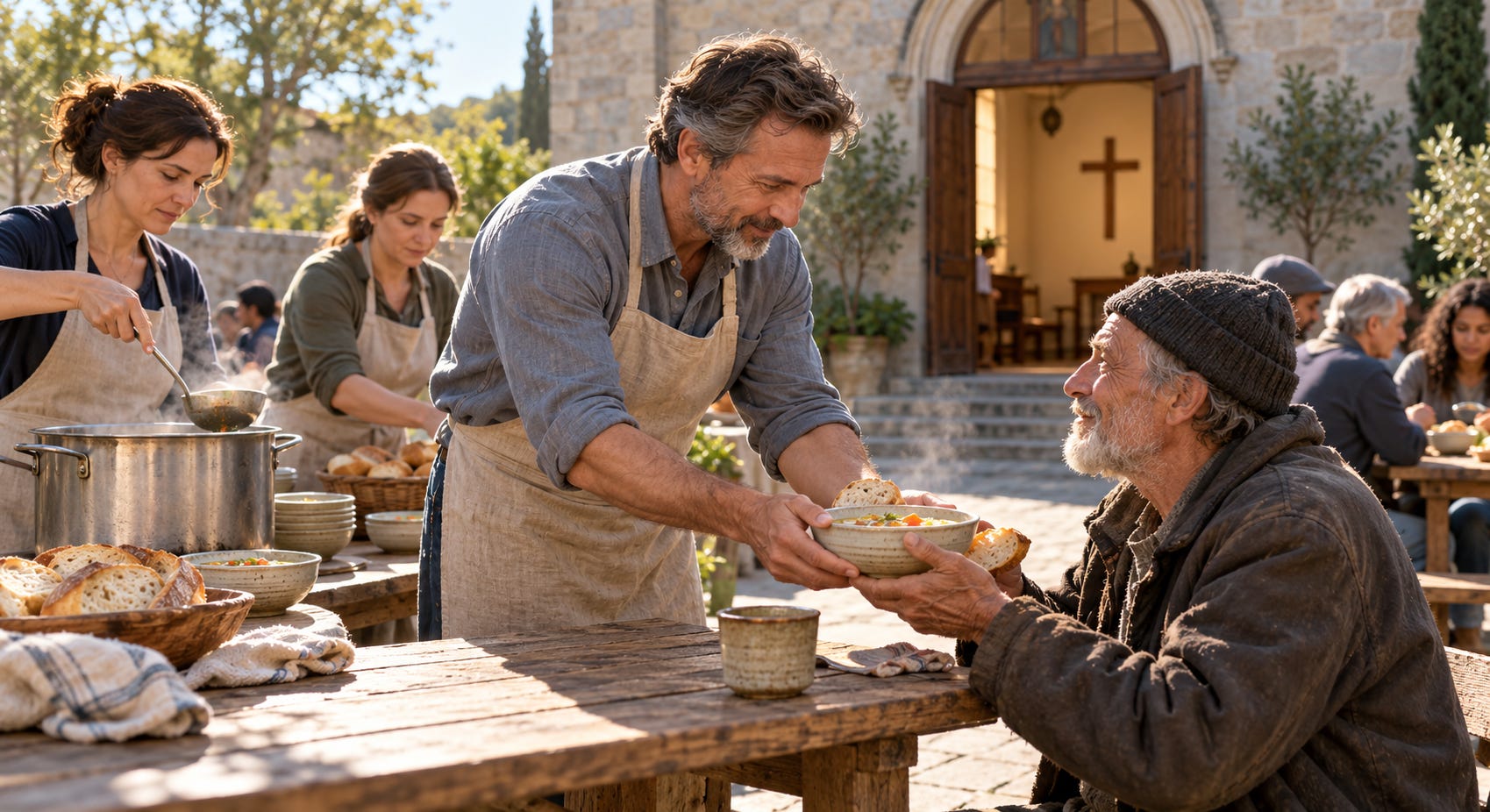
If a hungry person stands before me and I possess food, God’s sovereignty does not erase my responsibility. My provision may be one of the means God intends to use. If someone is being mistreated, saying “God sees it” does not release me from doing what is right. The fact that God will judge evil tomorrow does not excuse my silence today.
Prayer also remains meaningful.
We do not pray because God lacks information. We do not need to brief Him on events He overlooked. Neither do we pray to overpower His will with ours.
We pray because He commands relationship with His children, shapes our hearts through prayer, and chooses to answer prayers within His sovereign purpose.
A parent may already intend to feed his child and still teach that child to ask for bread. The request does not create the parent’s love. It draws the child into trust, dependence, gratitude, and relationship.
Prayer is not an attempt to drag God into our plans.
It is where we bring our desires beneath His.
The same principle applies to preaching. God knows every person who will hear, reject, repent, or believe. We do not. Our ignorance does not excuse our silence. Christ commanded His followers to carry the gospel into the world, and the message they proclaim is one of the means through which faith comes.
The seed does not grow because the farmer possesses divine power.
The farmer still has to sow it.
Bounded free agency means our actions are genuine without being sovereign. We can plant, water, teach, build, serve, warn, forgive, and pray. We cannot force the final result. That boundary protects us from two opposite errors.
The first is complacency: “God controls everything, so my choices do not matter.”
The second is pride: “Everything depends upon me, so God’s purpose will collapse if I fail.”
Both are false.
Our choices matter, but we are not God.
We are responsible for obedience, not for controlling every outcome. We speak truth, but we cannot force anyone to love it. We offer mercy, but we cannot make anyone receive it. We labor faithfully, but the final increase belongs to God.
This also keeps works in their proper place.
We do not serve in order to purchase salvation. Christ paid what we could never pay. We are saved by grace through faith, and genuine faith changes how we live. Good works are not the price of mercy; they are the fruit that grows from receiving it.
An apple tree does not bear apples to become an apple tree.
It bears apples because it is alive.
The three pillars remain standing.
God is sovereign: His purpose does not depend upon human strength and cannot be defeated by human failure.
Human agency is bounded: our choices, prayers, labor, courage, and obedience are real, but the final result remains in God’s hands.
The verdict is settled: God has already declared the end of faith and rebellion, and each person remains responsible for responding to the truth placed before him.
Sovereignty does not turn believers into spectators.
It frees us to work without pretending that the universe rests upon our shoulders.
We do not sit still because God is working.
We rise because He has given us work to do.
“Therefore, my beloved brethren, be ye stedfast, unmoveable, always abounding in the work of the Lord, forasmuch as ye know that your labour is not in vain in the Lord.” —1 Corinthians 15:58
—Jeff Wager
#WagerEssays #TheEssayDepot #WhatGodSays #Apologetics #Theology