
The objection is serious: If God created the world, knew rebellion would occur, and remains sovereign over everything that happens, does that make Him the author of sin?
If every evil act occurs inside boundaries God controls, critics ask how the moral stain can remain on the creature without reaching the Creator.
The answer begins with a distinction we cannot afford to blur:
Allowing a choice is not the same as making that choice.
God created human beings and angels with the ability to obey or rebel. Giving a creature the power to choose evil does not mean God placed the evil choice inside that creature or forced it to act.
Scripture describes God’s creation as good. Sin entered through rebellion against Him. The defect was not in God’s holiness or His command. It appeared when created beings used their God-given agency to reject the One who gave it.
God can permit an evil act, place limits around it, judge the person responsible for it, and still turn its aftermath toward good. None of those actions requires Him to approve the evil or become its moral author.
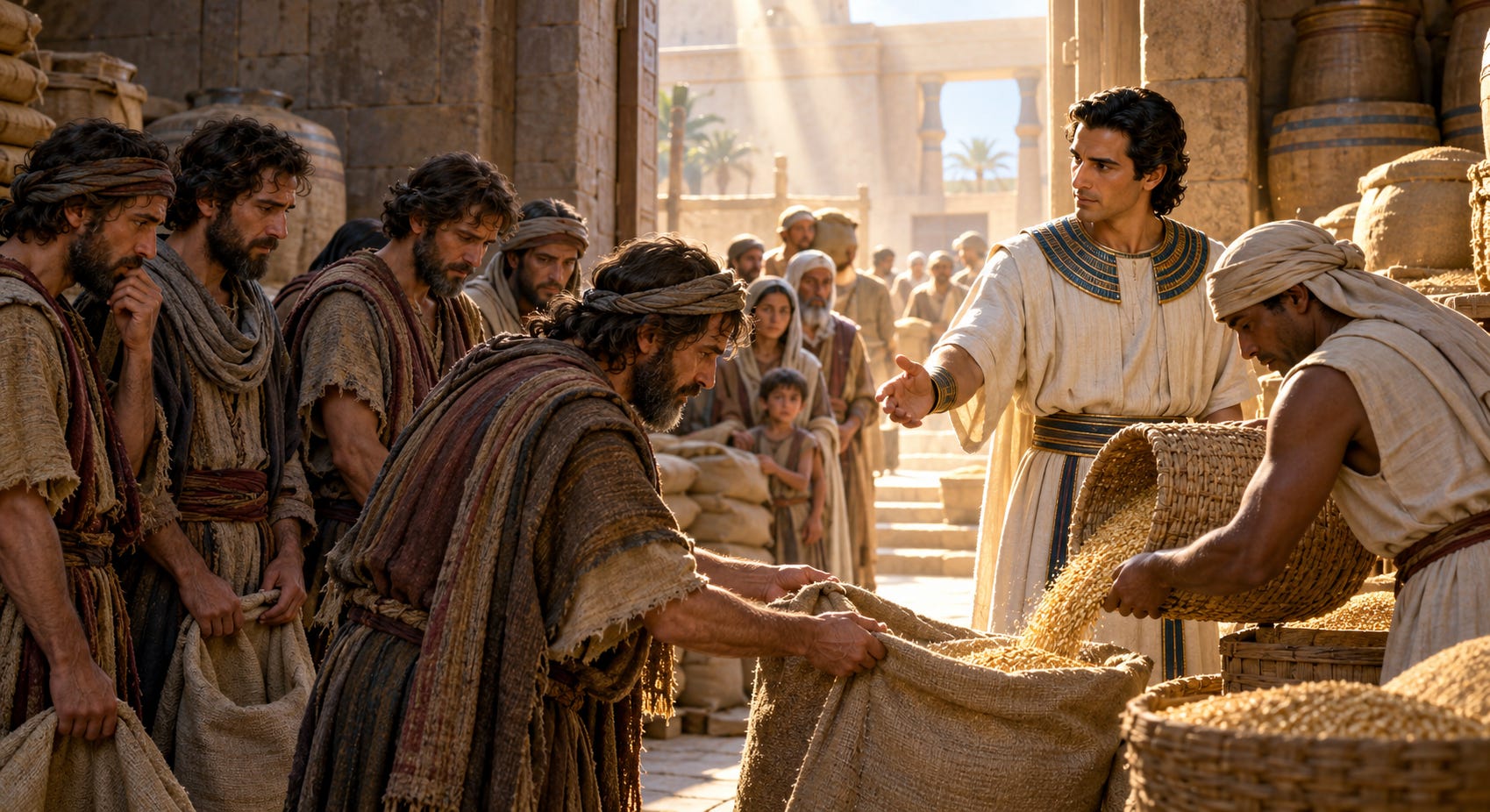
Joseph’s brothers provide a clear example. They chose to sell him into slavery. Their jealousy was their own, their actions were wicked, and their guilt remained real. Years later, Joseph told them that they had intended evil against him, but God had turned the outcome toward good by preserving many lives.
One event carried two different intentions.
The brothers intended harm.
God intended rescue.
God did not need to place hatred in their hearts to overrule what their hatred produced.
The crucifixion makes the distinction even clearer. Wicked men betrayed, condemned, tortured, and crucified Jesus. Scripture holds them responsible for what they did, yet their actions did not catch God by surprise or derail His plan. The cross became the very means through which God offered salvation to the world.
Human evil remained evil.
God’s purpose remained holy.
His sovereignty ruled over both.
Isaiah 45:7 is often pulled into this objection because the KJV says that God creates “evil.” In that passage, evil means calamity or judgment—the opposite of peace. It does not mean that God creates moral wickedness inside the human heart. Scripture plainly teaches that God does not tempt anyone to sin.
This distinction does not answer every question about why God permits a particular evil. Scripture does not reveal His private reason behind every tragedy, and we should not pretend that it does.
Mystery is not contradiction.
We know enough to keep the three pillars standing.
God is sovereign: no act of rebellion can overthrow His authority or prevent His final purpose.
Human agency is bounded: people make genuine moral choices, but they act within limits God controls and remain accountable for what they choose.
The verdict is settled: God has already declared the consequences of obedience and rebellion, and no one can rewrite them.
We do not protect God’s holiness by pretending He has lost control of His creation. Neither do we protect His sovereignty by blaming Him for the sins of His creatures.
Both errors remove responsibility from where Scripture places it.
God governs the world without becoming wicked. He permits choices without forcing them. He judges evil without committing it. He can take the very weapon raised against His purpose and turn it toward the defeat of evil itself.
The cross proves it.
“Let no man say when he is tempted, I am tempted of God: for God cannot be tempted with evil, neither tempteth he any man.” —James 1:13
—Jeff Wager
#WagerEssays #TheEssayDepot #WhatGodSays #Apologetics #Theology