
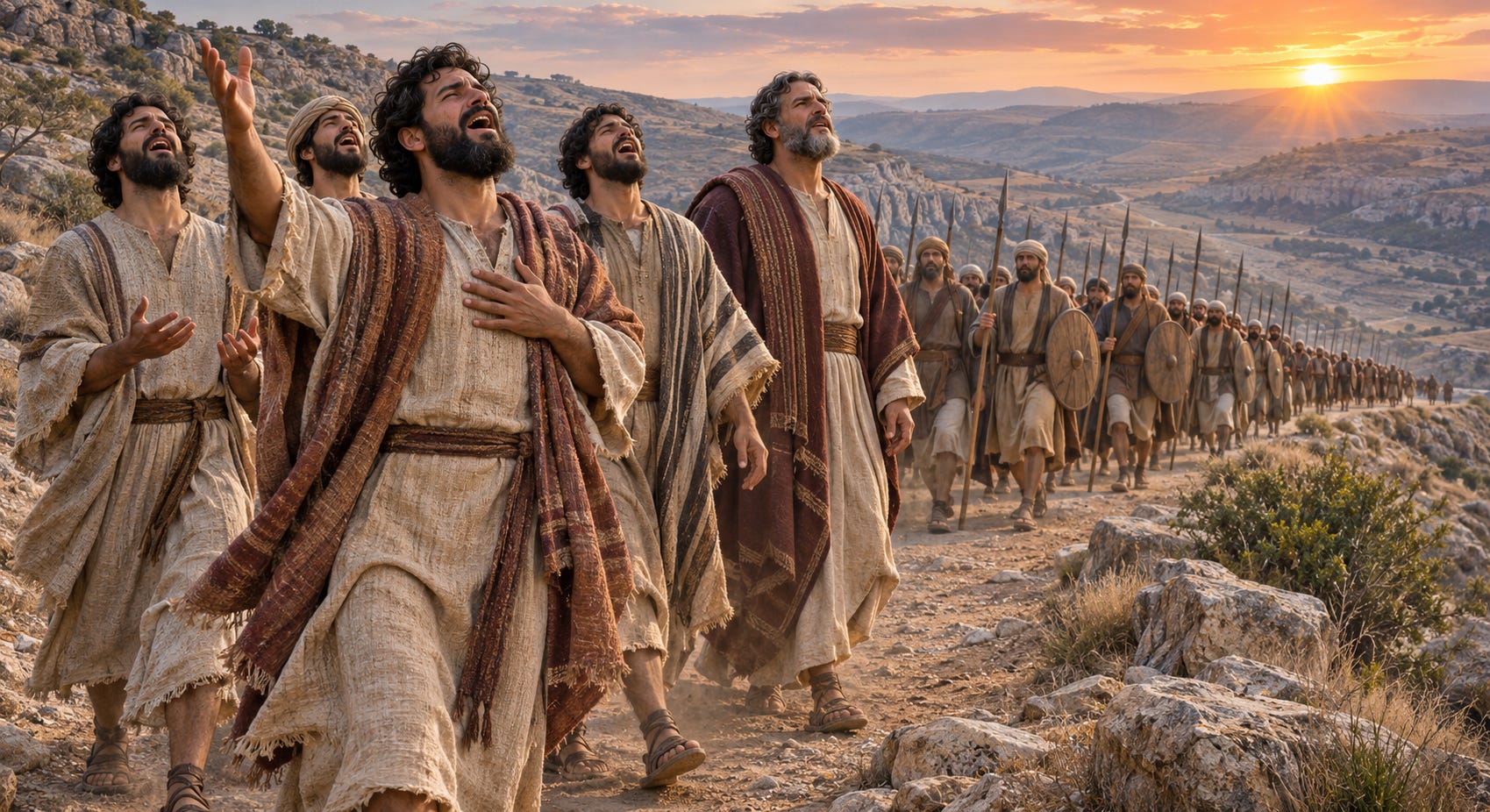
Jehoshaphat was afraid.
A great multitude was coming against Judah. The threat was real, and the king did not pretend otherwise. He set himself to seek the Lord and proclaimed a fast throughout the land.
From the cities of Judah, people gathered to ask God for help.
Jehoshaphat stood before them at the house of the Lord. He spoke of God’s authority over the nations, His power, and the land He had given His people. Then he brought their present danger before Him.
The prayer ended with an admission a king might find difficult to make before his own people.
They did not have the strength to face this army. They did not know what to do.
“But our eyes are upon thee.”
The king had no answer to announce. He knew whom to ask.
Judah stood before the Lord with their wives and children. In the midst of the assembly, the Spirit of the Lord came upon Jahaziel, a Levite. He delivered God’s answer: they were not to be afraid of the multitude. The battle belonged to God.
They were to go out the next day. They would not need to fight in this battle. They were to take their position, stand, and see the Lord’s deliverance.
God had given them something firmer than their own estimate of the odds.
Jehoshaphat bowed with his face to the ground. The people worshipped, and the Levites stood to praise the Lord with a loud voice.
The enemy had not yet been defeated. God’s promise had already been heard.
Early the next morning, they went into the wilderness of Tekoa. Jehoshaphat called upon them to believe the Lord their God and the word delivered through His prophets.
After consulting with the people, he appointed singers to go before the army.
They went out praising the Lord and declaring that His mercy endured forever.
Think of what stood behind that song. These were the people who had gathered because they needed help. Their king had admitted that he did not know what to do. Now they were moving toward the place God had named, trusting the answer He had given.
Their praise preceded the sight of their deliverance.
As they began to sing and praise, the Lord set ambushments against the invading forces. The enemy turned upon one another. When Judah reached the lookout over the wilderness, they saw bodies fallen upon the ground. None had escaped.
The battle had ended without Judah fighting it.
They gathered the spoil, blessed the Lord in the valley of Berachah, and returned to Jerusalem with joy.
Their fear had brought them to prayer. God’s word had given them direction. Trust had carried them forward before their eyes could confirm the outcome.
That is what makes the singers at the front of the army more than an unusual detail.
They were responding to a promise. The music did not force God to act, and their confidence did not create His power. He had spoken; they believed Him enough to go where He directed.
We can become so occupied with the size of a problem that we forget to bring it before God. We measure our resources, rehearse the danger, and keep returning to the same conclusion: we cannot manage this.
Jehoshaphat reached that conclusion too.
He made it part of his prayer.
Faith did not require him to call the army harmless. It led him to confess his need and seek the Lord. Once God gave direction, faith meant listening and responding.
We have no authority to claim that every battle will end as Judah’s did. God gave them a particular promise for that particular danger. We can trust what He has revealed without inventing a guarantee for the outcome we prefer.
We can also praise Him while the trouble remains. His character does not wait upon our circumstances to become worthy of worship.
Judah’s singers went ahead of the army because God’s word had gone ahead of them.
They had not yet seen the victory, but they had heard the Word of God—and they joyously placed their faith in it.
“O our God, wilt thou not judge them? for we have no might against this great company that cometh against us; neither know we what to do: but our eyes are upon thee.” —2 Chronicles 20:12
—Jeff Wager
#WagerEssays #TheEssayDepot #WhatGodSays #Apologetics #Theology