
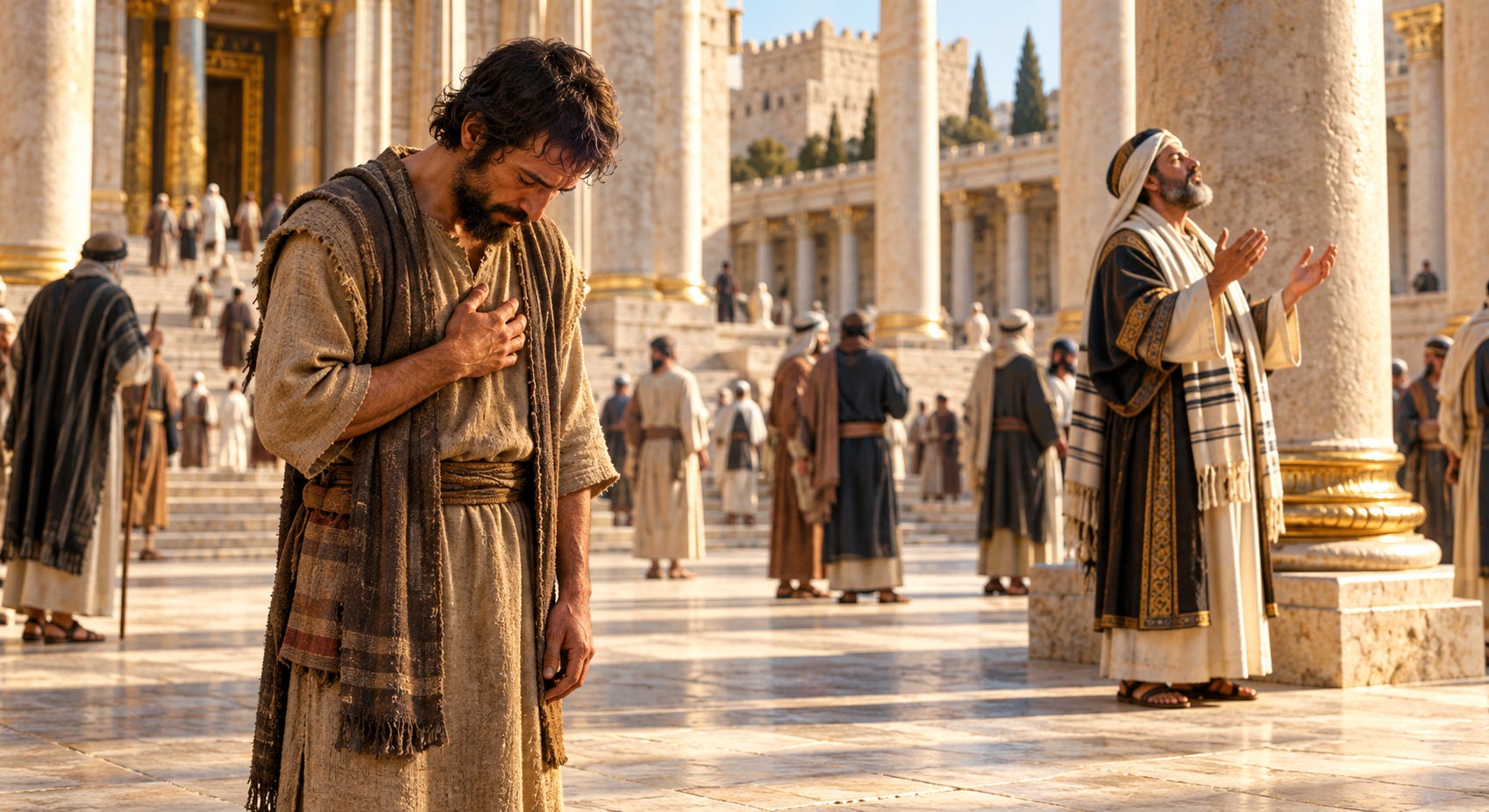
Two men went to the temple to pray. In the story Jesus told, one was a Pharisee who thanked God that he was unlike other men. He named their sins, mentioned the tax collector nearby, and presented his own record of fasting and giving.
He had come to pray and brought his résumé.
The tax collector stood at a distance. He would not even lift his eyes toward heaven. Beating his breast, he said, “God be merciful to me a sinner.”
Jesus said that man went home justified rather than the other.
His prayer had few words, but he had brought his need honestly before God. The Pharisee trusted his own righteousness and looked down on someone else. The tax collector depended upon mercy.
We can make prayer feel terribly complicated when we become more concerned about how we sound than whom we are approaching. A person may know exactly what hurts and still struggle to put it into a sentence. Grief tangles the words. Shame makes them difficult to begin. Sometimes exhaustion leaves us with little more than a name and a plea.
Jesus taught His disciples to approach their Father. He warned against praying for an audience and against empty repetition built on the belief that more words would guarantee a hearing. Their Father already knew what they needed before they asked.
Then He gave them words to pray: honor for God’s name, surrender to His will, daily bread, forgiveness, and deliverance from evil. The prayer brought ordinary human need before the holy God who could meet it.
That invitation has a foundation far stronger than our ability to speak well.
Paul writes that through Christ we have access by one Spirit unto the Father. The Son has opened the way through His saving work. The Spirit helps us in our weakness. The Father receives those who come through Christ.
Our access rests upon what God provides.
That gives meaning to praying in Jesus’ name. We come trusting Him and depending upon His authority. His name belongs to the Savior we follow, and our requests remain subject to the wisdom and will of God.
Stephen called directly upon Him as stones were taking his life: “Lord Jesus, receive my spirit.” His prayer reached toward the living Lord he trusted. Even there, he prayed for the people killing him.
The words were simple. The faith reached deep.
Paul also describes weakness so great that we do not know what to pray for as we ought. Into that very weakness comes the Spirit’s help, making intercession according to God’s will. The passage gives a struggling believer somewhere to rest when even the request seems beyond reach.
God’s knowledge extends past the sentence we manage to finish.
There is room for a carefully considered prayer and for a cry that comes apart halfway through. We can learn from the words Jesus gave us while trusting the mercy that allows us to speak them. We can bring our requests and surrender their answers to Him.
The tax collector’s prayer remains wonderfully plain. He stood before God with nothing in his hands that could purchase forgiveness, asking for the mercy he needed.
Jesus said he went home justified.
“For through him we both have access by one Spirit unto the Father.” —Ephesians 2:18
—Jeff Wager
#WagerEssays #TheEssayDepot #WhatGodSays #Apologetics #Theology