
Adam had an explanation ready.
When God asked whether he had eaten from the forbidden tree, Adam pointed toward the woman—and then toward the God who had given her to him. She had given him the fruit, and he had eaten it.
Eve pointed toward the serpent.
The explanations moved around the garden. The guilt did not disappear.
They had already tried covering themselves with fig leaves. They had hidden among the trees. Neither the covering nor the hiding could undo what they had chosen. God had spoken, they had disobeyed, and His warning still stood.
The trouble was sin. They had crossed the boundary God had placed before them.
That distinction keeps the account straight. God’s gift of freedom did not make Him guilty of their rebellion. The serpent’s deception did not turn their disobedience into obedience. Each answer brought the matter back to something that had actually been done.
We still know our way around that garden.
A wrong choice acquires a long explanation. Someone else provoked it. Circumstances encouraged it. Good intentions supposedly soften it. Sometimes the explanation contains facts worth hearing. It still cannot make the wrong become right.
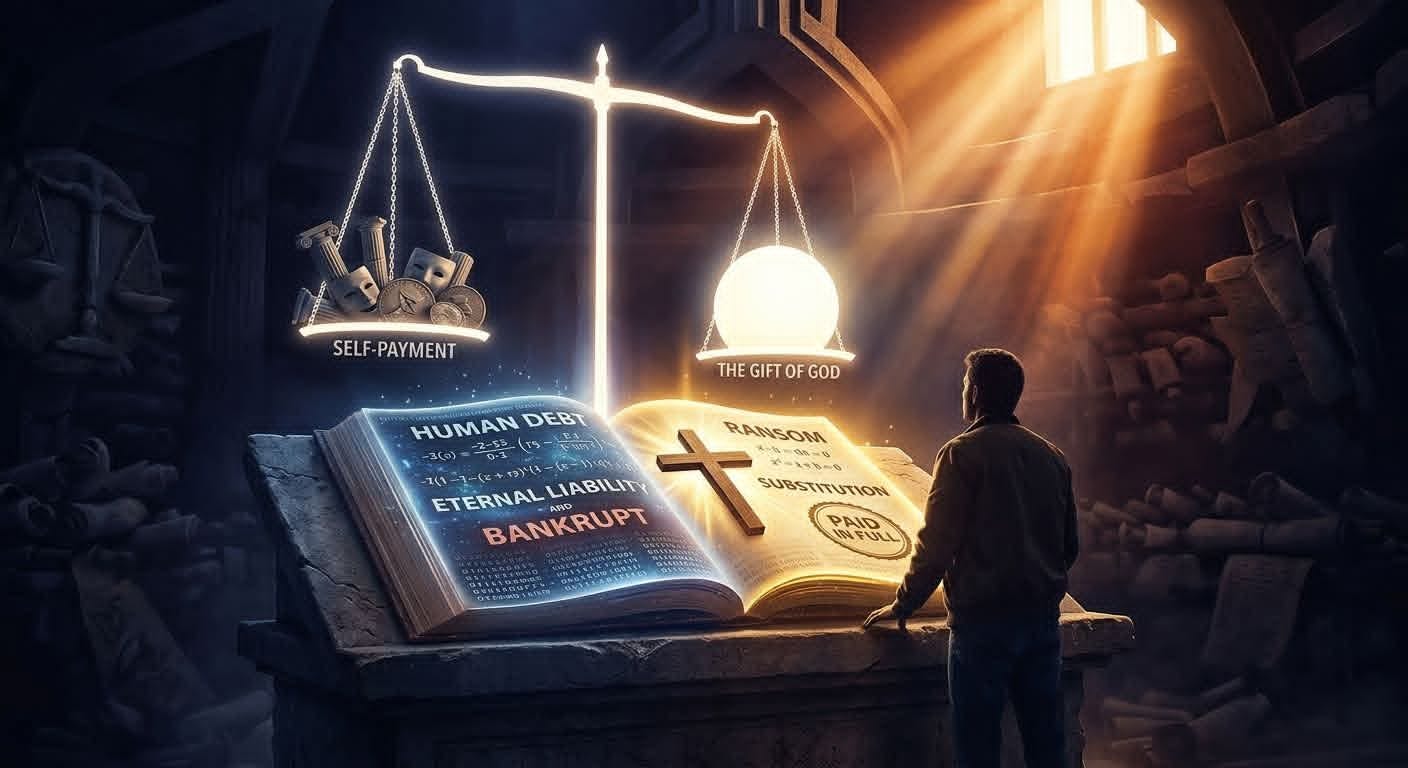
Then comes another proposal: perhaps enough good conduct will balance the account.
Generosity goes into one column. Dishonesty goes into another. A few kind acts are placed beside the harm, and the person holding the pencil hopes the final total will look respectable.
A good deed cannot travel backward and make an injured person unhurt.
Repayment may address a financial loss. An apology may begin rebuilding trust. Those things matter, but they cannot purchase innocence before God. Sin reaches deeper than a ledger we can rearrange until we like the balance.
Paul names its wages plainly: death.
Peter writes that redemption was not purchased with silver or gold, but with the precious blood of Christ. The rescue cost more than anything we could place in our own column.
The Savior gave His life.
He did not come because humanity had discovered a way to make God owe us forgiveness. He came in mercy to people who needed what they could not provide. Peter describes Him as foreordained before the foundation of the world. The cross fulfilled God’s purpose; it was never a hurried repair after creation escaped His hands.
Paul describes forgiveness with a striking picture: the record standing against us taken out of the way and nailed to Christ’s cross. The answer to our guilt rests in His saving work.
The debt was ours. The mercy was His.
Faith receives that mercy. It does not become another payment added to the account. The empty hand trusting Christ has nothing to boast about except the Savior who supplies what it lacks.
That leaves our response meaningful without placing God beneath our authority. We can trust Christ or reject Him. We cannot establish another price, manufacture another Savior, or require God to accept our good intentions as payment. He has already declared where faith and rejection lead.
Receiving forgiveness also leaves room for honest responsibility. Someone we harmed may still need protection. Money may still need repaying. Trust may take years to rebuild. Christ’s mercy gives us reason to face those things without pretending they can buy the salvation He gives.
Adam’s explanation could not undo the fruit he had eaten. Our explanations cannot erase our own guilt.
The hand holding the pencil can stop trying to improve the total.
Christ has provided what no entry in our column could ever supply.
“For the wages of sin is death; but the gift of God is eternal life through Jesus Christ our Lord.” —Romans 6:23
—Jeff Wager
#WagerEssays #TheEssayDepot #WhatGodSays #Apologetics #Theology