
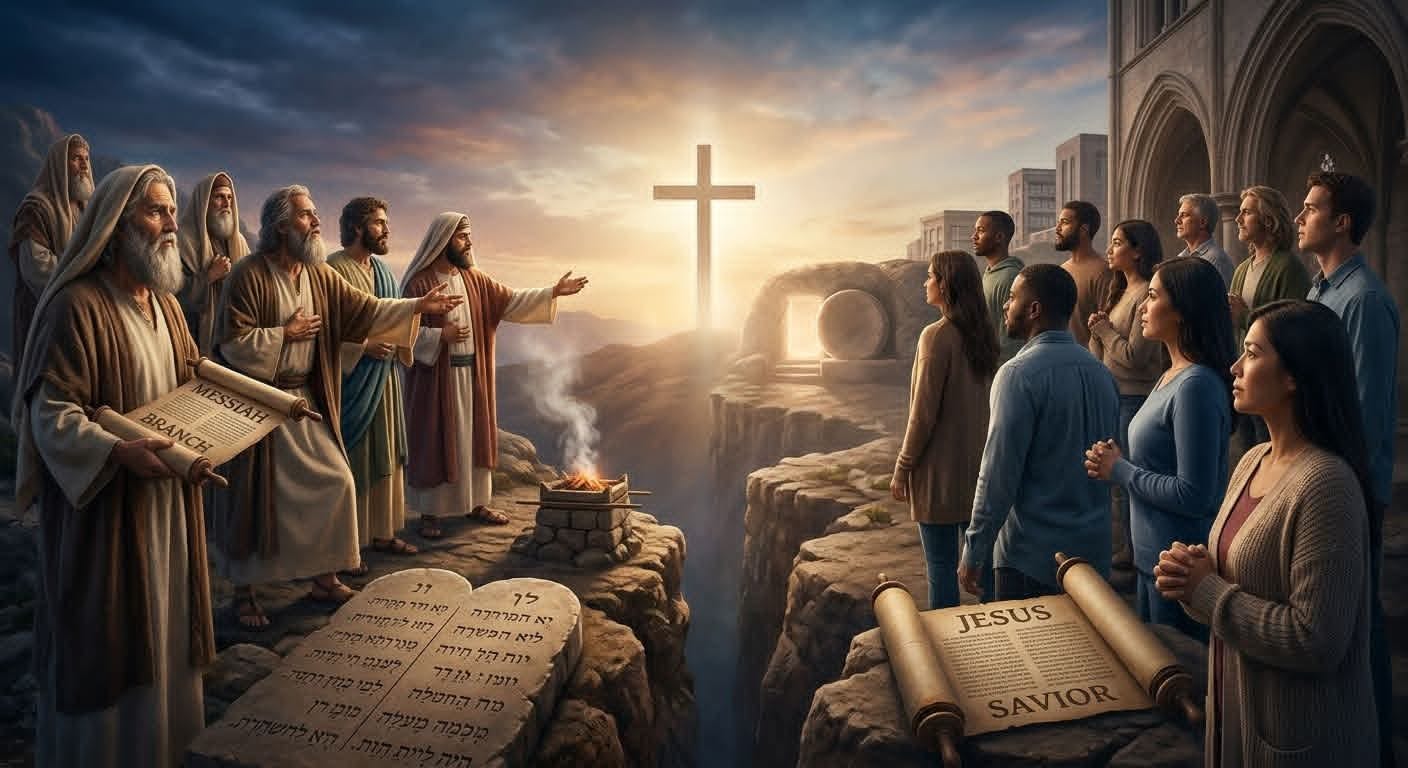
Long before Moses stood at Sinai, Abraham stood beneath the stars with a promise he could never fulfill for himself.
He had no child through whom that promise would continue. God told him his own son would be his heir, then directed his attention toward heaven. Count the stars, if he could. His descendants would be that numerous.
Abraham believed Him.
There were no stone tablets in Abraham’s hands. Moses had not yet received the law. God had spoken, and Abraham trusted the One who spoke.
Scripture says God counted that faith to him for righteousness.
That is where Paul takes us when he explains salvation in Romans. He opens the old account of Abraham and shows us faith receiving what human effort could never purchase.
Abraham had a promise to trust. We have its fulfillment to look back upon. The Savior who fulfilled it holds both ends of the story.
The promise reaches back even farther than Abraham.
In Genesis 3:15, God spoke to the serpent about the woman’s seed. The serpent would bruise His heel; He would bruise the serpent’s head. There, at the beginning of humanity’s story, stands the promise Christians recognize as the first announcement of the coming Savior.
God continued unfolding that promise through the generations. Abraham was told that all nations would be blessed through him. Paul identifies Christ as the promised Seed in whom that blessing reaches the nations.
The promise kept moving toward its appointed fulfillment.
Along the way came the law, the priests, and the sacrifices. God gave His people commands to obey and a way of worship that taught them about holiness, guilt, and their need for mercy.
The sacrifices returned again and again. Each passing year brought another remembrance of sin.
Hebrews tells us why: the blood of bulls and goats could never take away sins. Those offerings pointed beyond themselves to the sacrifice Christ would make once for all.
A shadow tells you someone is coming. The shadow itself cannot put its arms around you.
The prophets searched those promises. Peter says the Spirit of Christ within them testified beforehand about Christ’s sufferings and the glory that would follow. They examined what they had been given, seeking to understand the person and the time.
Think about that. Men whose words we now read beside the Gospel accounts were still searching the words they had been entrusted to deliver.
Their faith rested in God while He continued revealing His purpose. They could trust His promise before they could see every detail of its fulfillment.
We now know the Savior’s name. We can read about His birth, His teaching, His crucifixion, and His empty tomb. The faithful who lived before His coming trusted God with the light He had given them. Their salvation rested upon the work Christ would accomplish.
Hebrews makes that connection plainly: His death redeems the transgressions committed under the earlier covenant.
His sacrifice reaches the people who awaited Him as surely as it reaches those who believe in Him today.
Obedience belonged in their lives, just as it belongs in ours. Faith gives a person reason to listen when God speaks and to follow where He leads. Human obedience has never supplied the price of redemption.
Christ supplied that.
Peter tells us He was foreordained before the foundation of the world. The centuries unfolded within a purpose God already knew. Every promise was safe in His keeping, even while generations waited to see how He would fulfill it.
We look back toward the Savior they awaited. They trusted God to keep His word; we see that word fulfilled in Jesus Christ.
The years between us cannot divide the mercy that saves us.
God kept His promise. Christ paid the cost. Faith rests in Him.
“Of which salvation the prophets have enquired and searched diligently, who prophesied of the grace that should come unto you: Searching what, or what manner of time the Spirit of Christ which was in them did signify, when it testified beforehand the sufferings of Christ, and the glory that should follow.” —1 Peter 1:10–11
—Jeff Wager
#WagerEssays #TheEssayDepot #WhatGodSays #Apologetics #Theology