
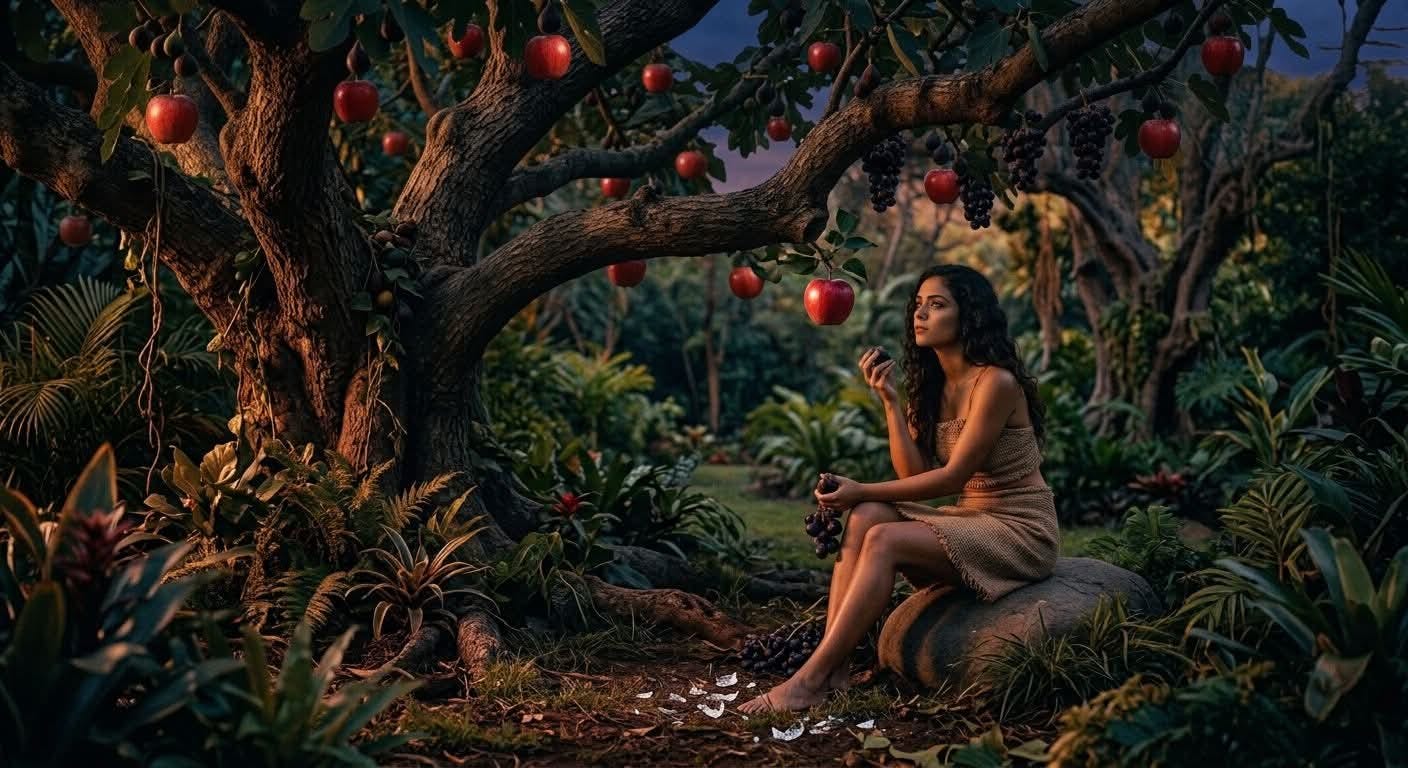
The first weapon raised against humanity was not a sword.
It was a question mark.
God had placed Adam and Eve in a garden overflowing with life. Food grew from the ground. Rivers watered the land.
Freedom stood everywhere around them.
God gave them one boundary.
They could eat from every tree in the garden except the tree of the knowledge of good and evil. The command was plain, and so was the consequence: “In the day that thou eatest thereof thou shalt surely die.”
Choice already existed. Adam and Eve did not need to sin to become free. They were free before they ever touched the fruit. Love, trust, and obedience meant something precisely because they could choose otherwise.
Then the serpent entered the conversation.
He did not begin by offering fruit.
He began by editing God.
“Yea, hath God said?”
The question sounded small, almost harmless. The serpent merely wanted to discuss the wording—or so it appeared. His real target was not the tree. It was their confidence in the One who planted it.
Had God truly said that?
Had they understood Him correctly?
Was the boundary protecting them, or keeping something wonderful from them?
The serpent did not need to tear the command apart. He only needed Eve to loosen her grip on it.
She answered that they could eat from the garden’s trees, but not from the tree in its midst. Eating it—or even touching it, she said—would bring death.
The serpent then dropped the question and spoke the lie plainly.
“Ye shall not surely die.”
God had declared the consequence. The serpent denied it.
He promised that their eyes would be opened and that they would become as gods, knowing good and evil. He wrapped rebellion in the language of advancement. Disobedience no longer looked like death. It looked like enlightenment.
That sales pitch has never gone out of business.
Sin can still approach people the same way. It questions what God said, denies the consequence, and presents the forbidden thing as something God unfairly withheld. The hook changes with every generation, but the snake oil in the bottle remains the same.
Eve looked at the tree.
The fruit appeared good for food, pleasing to the eyes, and able to make one wise. What God had forbidden now looked reasonable, beautiful, and useful.
She took the fruit and ate.
She gave some to Adam, who was with her, and he ate as well.
The serpent had spoken, but it did not move their hands. Eve chose. Adam chose. Neither stepped outside God’s sovereign authority, yet both became responsible for crossing the boundary He had plainly established.
Their eyes opened exactly as the serpent had promised—but not onto the glory he had advertised.
They saw their nakedness.
Shame entered the garden. They stitched fig leaves together and tried to cover themselves. When they heard God walking among the trees, the man and woman who once lived openly before their Creator hid.
A few leaves could not cover what they had done.
God called, “Where art thou?”
He was not searching for information. He was calling Adam out from hiding.
Adam blamed Eve. Eve blamed the serpent. The serpent offered no defense. Sin had entered through personal choice, and blame immediately began looking for somewhere else to live.
God rendered the verdict.
The serpent was cursed. Sorrow entered childbirth. The ground was cursed for Adam’s sake. Labor became painful. Death began its march through human history, exactly as God had warned.
The serpent lied about the consequence.
God did not.
Then mercy spoke in the middle of judgment.
God declared that the woman’s seed would bruise the serpent’s head, though the serpent would bruise His heel. Before Adam and Eve left the garden, God had already announced the coming conflict and its final outcome.
The serpent would wound.
Christ would crush.
Adam and Eve could not sew enough leaves together to hide what they had done. God clothed them with coats of skins. Their covering came from His hand, not theirs.
The pattern had begun.
Humanity sinned. God judged. God also promised the Deliverer who would bear sin’s cost and destroy the serpent’s claim.
The first whisper in the garden still echoes whenever God’s word is treated like the opening bid in a negotiation. That whisper invites us to believe that God’s boundary is the problem and our rebellion is the solution.
The cross answers that ancient lie.
God did not withhold life from humanity. He sent His Son to restore it. Jesus entered the world promised as the woman’s seed, accepted the serpent’s wound, carried mankind’s judgment, and rose with death defeated beneath His feet.
One question opened the door to doubt.
One choice brought sin into the world.
One sovereign promise declared how the story would end.
“And I will put enmity between thee and the woman, and between thy seed and her seed; it shall bruise thy head, and thou shalt bruise his heel.” —Genesis 3:15
—Jeff Wager
#WagerEssays #TheEssayDepot #WhatGodSays #Apologetics #Theology