
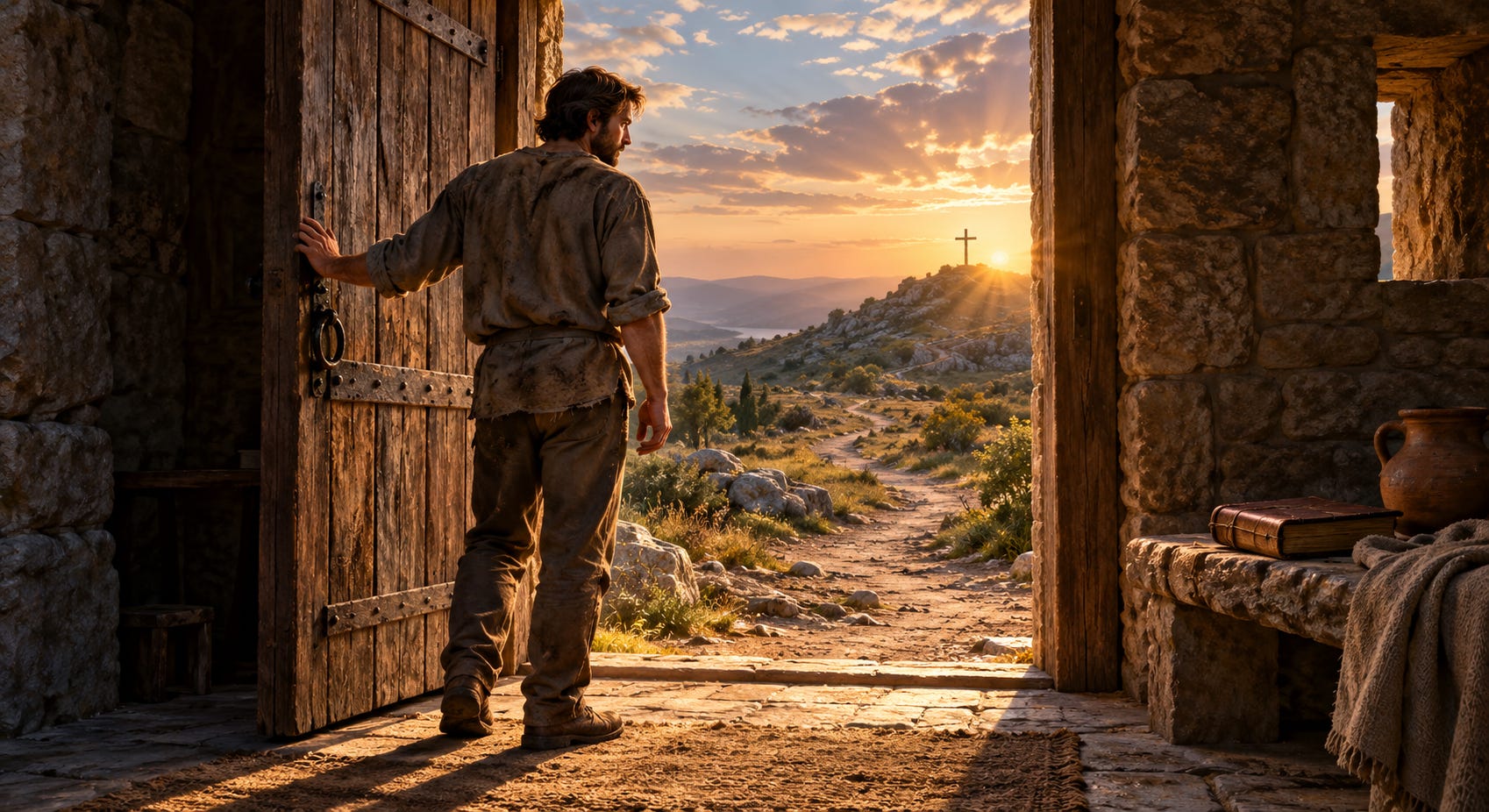
People like having choices until God commands them to make one.
Then suddenly, freedom feels offensive.
We want the right to choose while reserving the right never to be held responsible for what we choose. We want to cast the ballot, count it only when we win, and blame the election board when the result arrives.
God does not offer that arrangement.
He gives us genuine freedom, but that freedom operates inside boundaries He established. We may choose obedience or rebellion, faith or rejection, life or death. What we cannot choose is whether the choice matters.
That is the ironic command:
You have no choice. You will choose.
We may speak, remain silent, step forward, turn away, believe, reject, obey, delay, or pretend the question was never asked. Refusing to answer is still an answer. A man may leave a court summons unopened on the kitchen table, but the unopened envelope does not make the courtroom disappear.
Neutrality is not a hidden third road.
The garden displayed this truth from the beginning. God surrounded Adam and Eve with abundance, gave them meaningful work, and permitted them to eat freely from the garden. He also placed a boundary before them and clearly announced the consequence of crossing it.
The tree was not an accident, and the command was not a suggestion.
Adam and Eve possessed real freedom, but they did not possess authority over the consequence. They could choose the fruit. They could not command death to stay outside afterward.
The same pattern runs through Scripture. God places the roads before humanity, explains where they lead, and commands us to choose. He does not wait until the end of time to decide what good and evil mean. His verdict has already been stated.
Faith leads to life through Jesus Christ.
Rejection leaves a person separated from the only source of life.
Judgment is not God inventing a punishment after becoming angry with our final answer. It is the gavel falling upon the verdict He announced before we ever entered the courtroom.
People object, “Who is God to demand anything from me?”
That question starts with the strange assumption that the clay owns the Potter.
God created the person asking the question, the mind forming it, the lungs supplying the breath, and the universe providing a place to stand while making the complaint. We may question God, wrestle with His Word, cry out from confusion, or bring Him our pain. Scripture contains plenty of people doing exactly that, but we cannot drag the Creator beneath our authority and demand that He justify His right to be God.
The clay does not own the wheel.
The authority of God does not make His mercy cold. He does not demand that a broken person repair himself before coming to Christ. He does not require theological brilliance, polished prayers, or a spotless history.
He requires faith.
That faith does not purchase salvation. Jesus purchased salvation. Faith is the empty hand that receives what Christ has already paid for.
Sometimes that hand reaches out with confidence. Sometimes it trembles. Sometimes the first honest prayer is little more than, “God, if You are there, help me.”
Those words are not a magic password. Merely speaking them does not force heaven to stamp a certificate. When they rise from a heart beginning to turn toward God, they may mark the first crack in a wall of pride that has stood for years.
God sees beneath the vocabulary.
The Holy Spirit helps us in our weakness and intercedes when we do not even know how to pray. God is not confused by tears, frightened by questions, or waiting for perfect grammar. He knows whether a heart is performing for an audience or honestly reaching for Him.
Grace does not remove the command to choose. Grace makes life available to people who could never earn it.
The choice remains real.
The verdict remains settled.
The mercy remains open through Jesus Christ.
We may spend years pretending to sit outside the question, but every day our lives answer it. We move toward God or away from Him. We receive His authority or resist it. We trust His Son or remain in ourselves.
No one escapes the choice.
Through Christ, no repentant soul who chooses life is turned away.
“Woe unto him that striveth with his Maker! Let the potsherd strive with the potsherds of the earth. Shall the clay say to him that fashioneth it, What makest thou? or thy work, He hath no hands?” —Isaiah 45:9
—Jeff Wager
#WagerEssays #TheEssayDepot #WhatGodSays #Apologetics #Theology