
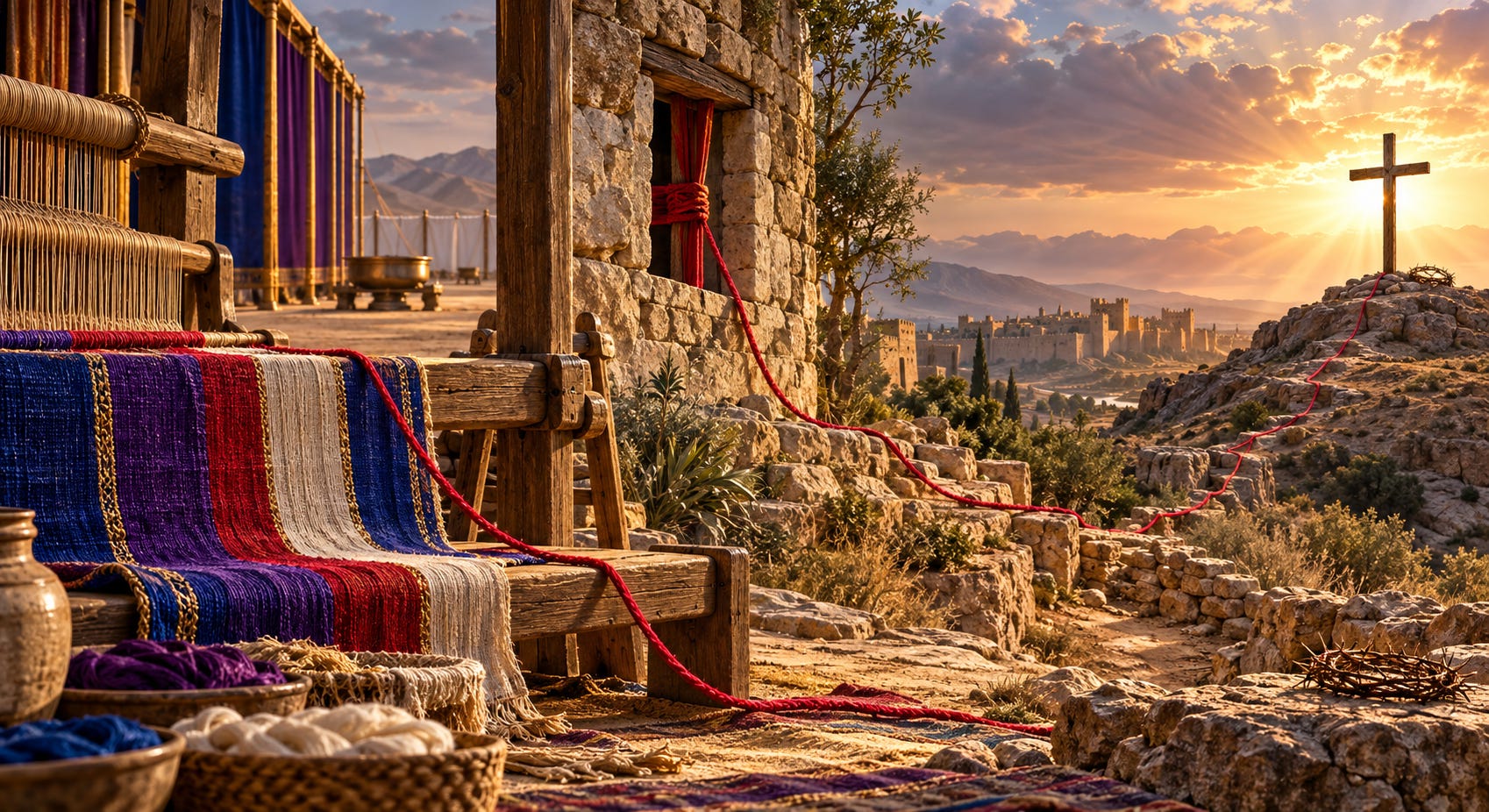
Scarlet thread was part of God’s own design for the tabernacle. When He instructed Israel to build it, He called for blue, purple, and scarlet thread to be woven into its curtains and veil. These were not decorations thrown together because Moses liked the colors. God designed every detail of the place where He would meet His people.
The tabernacle taught Israel that God was near, but it also taught them that sinful man could not casually stroll into His holy presence. A veil stood in the way. Priests served. Sacrifices were offered. Blood was shed. God welcomed His people, but He established the way they must approach Him.
Years later, scarlet appeared in the window of a condemned city.
Rahab lived inside Jericho, where judgment was already marching toward the walls. She had heard what the God of Israel had done, and she believed He was the true God of heaven and Earth. The spies gave her a clear command: tie a scarlet cord in the window and gather her family inside.
Rahab had a choice, but she did not get to rewrite the terms. The city outside that marked home would fall. The people gathered behind the scarlet cord would live. She believed, obeyed, and brought her family beneath the promise of mercy.
Scarlet later became the picture of something far less comforting. Through Isaiah, God compared sin to a stain too deep for human hands to scrub away. No amount of polishing could turn guilt into innocence. No pile of good deeds could bleach a soul clean. God did not expose the stain merely to shame the sinner. He revealed it so He could announce what only He could do: make scarlet sins white as snow.
Then the thread reached Jerusalem.
Roman soldiers stripped Jesus and wrapped Him in a scarlet robe. They pressed thorns into His head, placed a reed in His hand, bowed in mock worship, and laughed at the King they could not recognize. They thought scarlet made Him look like a counterfeit ruler. In truth, the robe rested upon the shoulders of the only King who could carry the scarlet stain of mankind.
Jesus walked from that mockery to the cross. His blood was not spilled because Rome had outmaneuvered God or because angry men had seized control of history. Christ freely laid down His life according to the plan of the Father. Human hands committed the crime, but their rebellion could not escape God’s authority or overturn His purpose.
When Jesus died, the veil of the temple was torn from top to bottom. The barrier no sinner could cross by personal merit was opened by the sacrifice no sinner could provide. The God who designed the veil also determined how it would be removed.
From the tabernacle curtain to Rahab’s window, from Isaiah’s scarlet stain to the robe placed upon Christ, Scripture carries one unfolding message: judgment is real, mercy is offered, and God establishes the way of deliverance.
The thread was scarlet.
The sinner was stained.
The sacrifice was Christ.
“Come now, and let us reason together, saith the LORD: though your sins be as scarlet, they shall be as white as snow; though they be red like crimson, they shall be as wool.” —Isaiah 1:18
—Jeff Wager
#WagerEssays #TheEssayDepot #WhatGodSays #Apologetics #Theology