
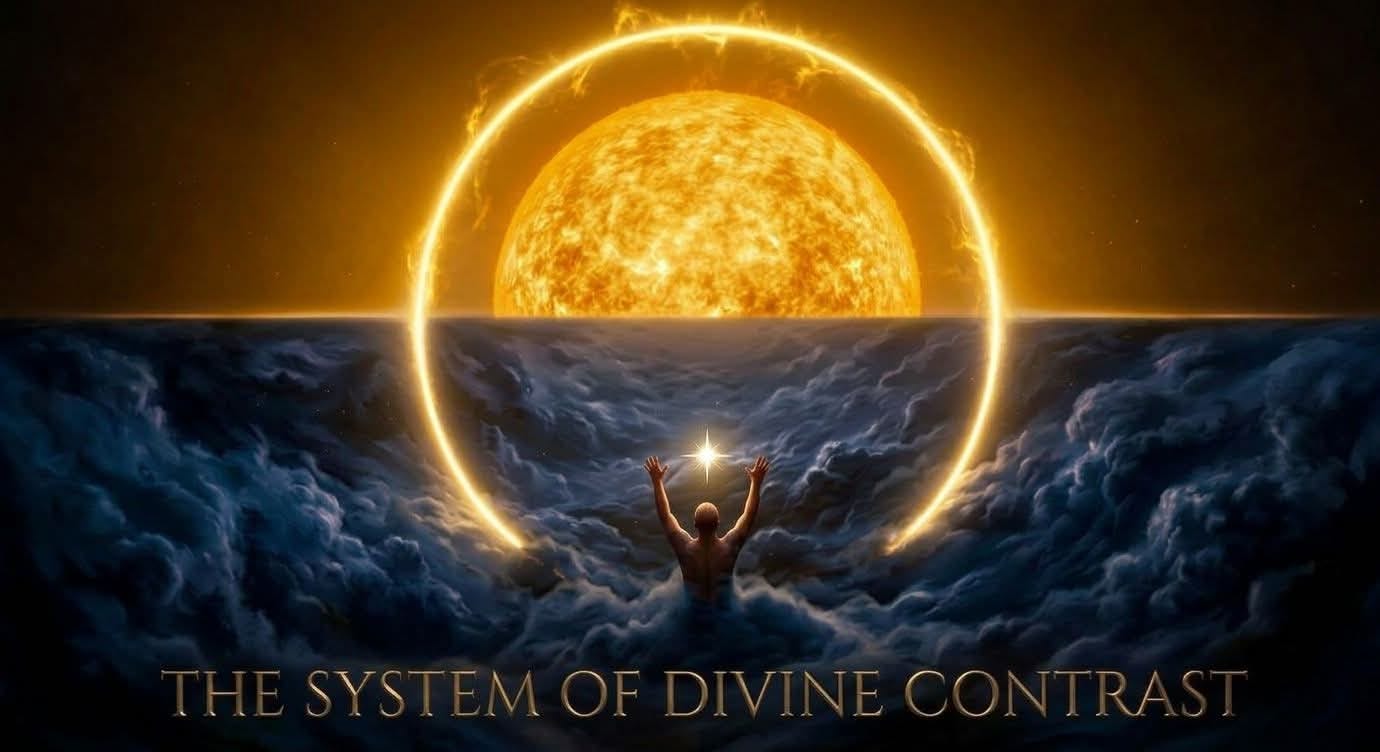
People often speak about evil as though it were a second throne—a wild power racing loose through the world while God struggles to contain it.
That is not the picture Scripture gives us.
Evil is real. It destroys lives, hardens hearts, and leaves wreckage wherever it goes. Satan acts, people rebel, and sin causes terrible harm, but none of it places God in a panic. Darkness has never outrun His authority, rewritten His plan, or knocked Him from His throne.
God does not create sin, approve rebellion, or tempt anyone to do evil, yet He permits people and spiritual powers to rebel within limits He alone controls. He can then take what was meant for evil and turn it toward His purpose without becoming the author of the evil itself.
Joseph’s brothers sold him into slavery. Their choice was wicked, but God used it to save lives. Pharaoh hardened his heart, but his rebellion still served God’s larger purpose. Satan attacked Job, but only within boundaries God established. Men nailed Jesus to a cross, believing they had silenced Him, while that very cross became the center of God’s plan to save sinners.
The Bible does not show us a helpless God watching history escape His hands. Neither does it show us a puppet master forcing people to sin and then punishing them for obeying His strings.
It shows us something deeper: God remains completely sovereign while human choices remain real.
That truth stands upon three pillars.
ABSOLUTE SOVEREIGNTY
God has never surrendered control of His creation.
He allows rebellion, but rebellion never becomes His equal. He permits evil to move, but He determines how far it can go. People may fight against His will, yet they cannot remove Him from His throne or prevent His final purpose from being fulfilled.
This does not make evil good. A knife remains dangerous even when a surgeon knows how to use one. In the same way, God can take the sharp edge of human rebellion and turn it toward an outcome the rebel never intended.
The crucifixion proves it. Evil men carried out an evil act, but their worst deed opened the door to God’s greatest offer of mercy.
The cross was not God losing control.
It was God turning what looked like defeat into victory.
BOUNDED FREE AGENCY
Human freedom is real, but it is not limitless.
We may choose whether to obey or rebel, love or hate, forgive or seek revenge, believe or reject, but we cannot rewrite truth, overthrow God’s authority, or choose the final results of our actions.
We can choose the road. We cannot move where that road leads.
A person may jump from a roof, but freedom does not cancel gravity. In the same way, we may ignore God’s commands, but we cannot cancel the consequences attached to rebellion.
Scripture does not treat us like lifeless pieces on a board. God calls us, warns us, teaches us, and commands us to choose. He places life and death before us because our response matters.
Our freedom has fences. Inside those fences, our choices are genuine. Outside them stands the unshakable authority of God.
THE VERDICT
Bounded free agency gives us room to choose. The verdict removes the illusion that we can avoid choosing—or negotiate what our choice will produce.
God has already declared the outcome of both roads. Faith in Jesus Christ leads to life. Rejecting Him leaves us beneath condemnation. Those verdicts are not waiting for human approval, and they do not change according to our feelings.
God commands a response. We may trust or reject Him, obey or rebel, surrender or walk away, but refusing to answer is still an answer. Silence, delay, and indifference do not remove us from the choice. They reveal the choice we are already making.
We are free to choose, but we are not free to avoid choosing.
Neither are we free to rewrite the outcome. God is not waiting at the end of the road to invent a consequence. He told us where both roads lead before we took our first step.
We choose the road. God has already declared where each road ends.
THE END WAS NEVER IN DOUBT
History is not an even fight between God and Satan. The final page has never been in doubt.
The serpent entered the garden, but he never took the throne. Pharaoh oppressed Israel, but he could not stop the Exodus. Empires rose against God’s people, but every one of them eventually fell. Jesus entered the grave, but death could not hold Him.
From the first lie in Eden to the empty tomb, God has shown us the difference between rebellion and obedience, death and life, darkness and light.
That contrast exposes what is inside us. Trouble does not always create our character; often, it drags our hidden character into daylight. Pressure shows whether we trust God or merely enjoy Him when life is easy.
This is The System of Divine Contrast:
God remains sovereign.
Our choices remain real.
Every life reveals which of God’s declared verdicts applies.
We are free to choose, but we are not free to choose what our choice will produce.
God has never lost control of the classroom. The lessons may be painful, and human rebellion may leave terrible scars, but history remains in His hands. When the final bell rings, every false throne will fall, every hidden choice will be revealed, and God’s authority will remain exactly where it has always been.
Unmoved.
Unchallenged.
Eternal.
“I form the light, and create darkness: I make peace, and create evil: I the LORD do all these things.” —Isaiah 45:7
In this verse, “evil” refers to calamity or judgment—not moral wickedness. God may send judgment, but He does not tempt people to sin or become the author of their rebellion.
The fourteen rebuttals within the Defensive Wall address the strongest objections raised against God’s sovereignty, our bounded free agency, and the verdict every person must face.
—Jeff Wager
#WagerEssays #TheEssayDepot #WhatGodSays #Apologetics #Theology