
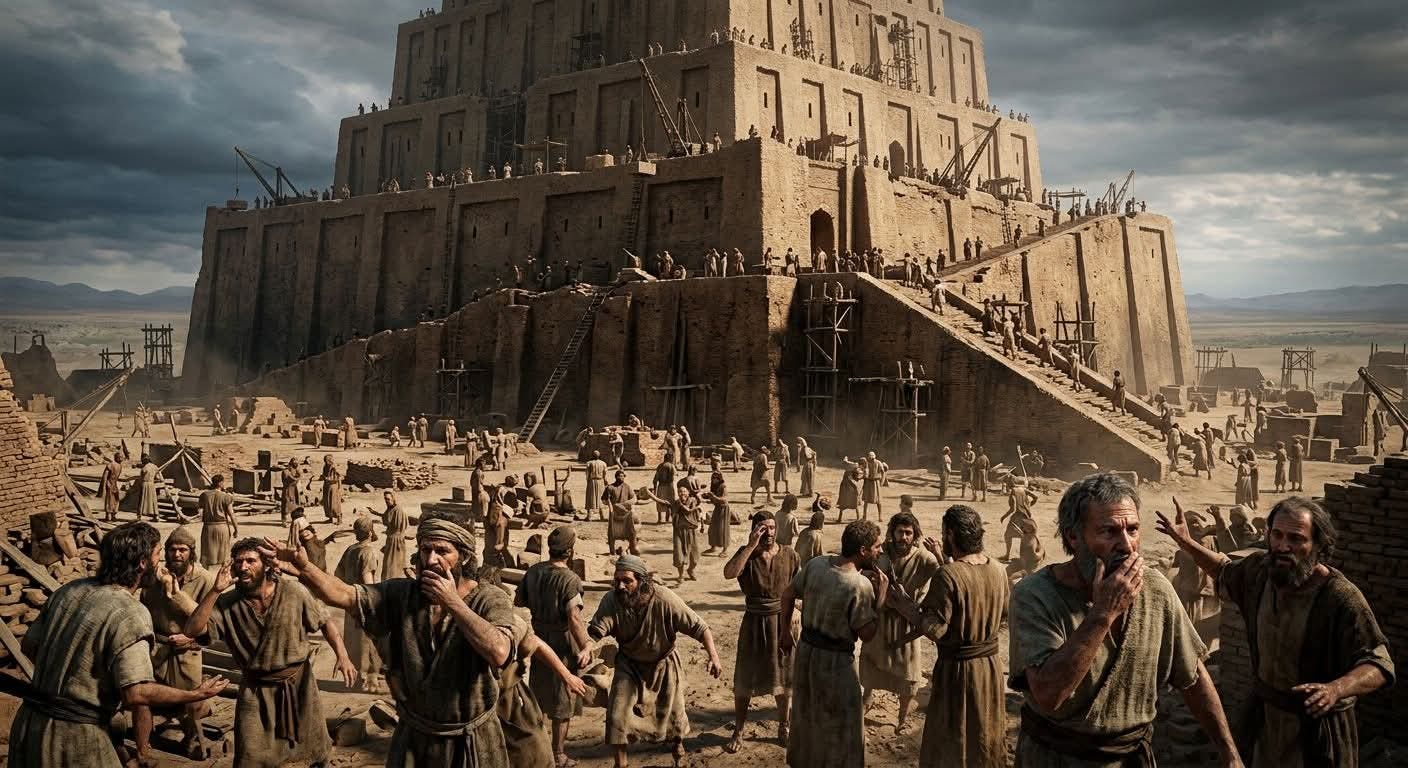
The builders on the plain of Shinar could understand one another. They shared a language, knew how to make bricks, and had a plan big enough to keep plenty of hands busy. They would build a city and a tower reaching toward heaven.
They also explained what they wanted from it: “Let us make us a name, lest we be scattered abroad upon the face of the whole earth.”
A name for themselves. A place to hold them together. Brick by brick, they were building their answer to the future.
They burned their bricks thoroughly and used bitumen for mortar. Their work required skill, cooperation, and effort. The trouble lay in what they expected their achievement to secure. Their plans had room for a great human name, but human agreement could not place the project beyond God’s authority.
There is a little wit in how Genesis tells the story. The people planned a tower reaching toward heaven, and the Lord came down to see it. All that upward ambition still belonged to the earth beneath His rule.
Their common language helped them work together, but they were using that unity to make a name and secure a future for themselves without God in the picture; therefore, the Lord confused their language so they could no longer understand one another.
He brought their shared undertaking to a stop.
The bricks had not lost their strength. The mortar had not forgotten how to hold. The builders had lost something their plans depended upon: the ability to understand the person working beside them. A great undertaking could go no further when its workers could no longer make themselves understood.
The Lord scattered them across the earth, and they stopped building the city. The very outcome they had organized themselves to prevent became the outcome of their undertaking. The place became known as Babel because there the Lord confused their language.
They had wanted to make a name. That name would carry the memory of their confusion.
Their choices were real. They chose the project, made the bricks, and began the work. God’s intervention was real too. Their freedom to build had never included the authority to be a god unto themselves without reaping God’s established consequence for that choice.
That is where their story reaches beyond an ancient construction site. Agreement can make us confident. Success can make us feel secure. A crowd repeating our own opinion can sound remarkably like permission; but none of it settles whether we are right before God.
The harvest does not take a vote among the people who planted it.
Babel’s builders were doing more than putting up a tower. They were making a name and planning a future as though their own will were the highest authority. They could leave God out of their plans. They could not remove themselves from His rule.
Their undertaking depended upon something they had brought to the work without making a single brick: the gift of speech. The Lord confused their language, and all their skill could no longer keep the project moving. The people who had built to prevent their scattering were scattered by His hand.
Babel became the name they carried out of that unfinished ambition. They had intended it to announce what they could accomplish together. Instead, it preserved the memory of what happened when they treated their agreement as the final authority.
We can still gather a crowd, raise something impressive, and call it progress. Babel leaves us with a question worth asking before the next brick goes down: whose will are we building to serve?
“Be not deceived; God is not mocked: for whatsoever a man soweth, that shall he also reap.” —Galatians 6:7
—Jeff Wager
#WagerEssays #TheEssayDepot #WhatGodSays #Apologetics #Theology