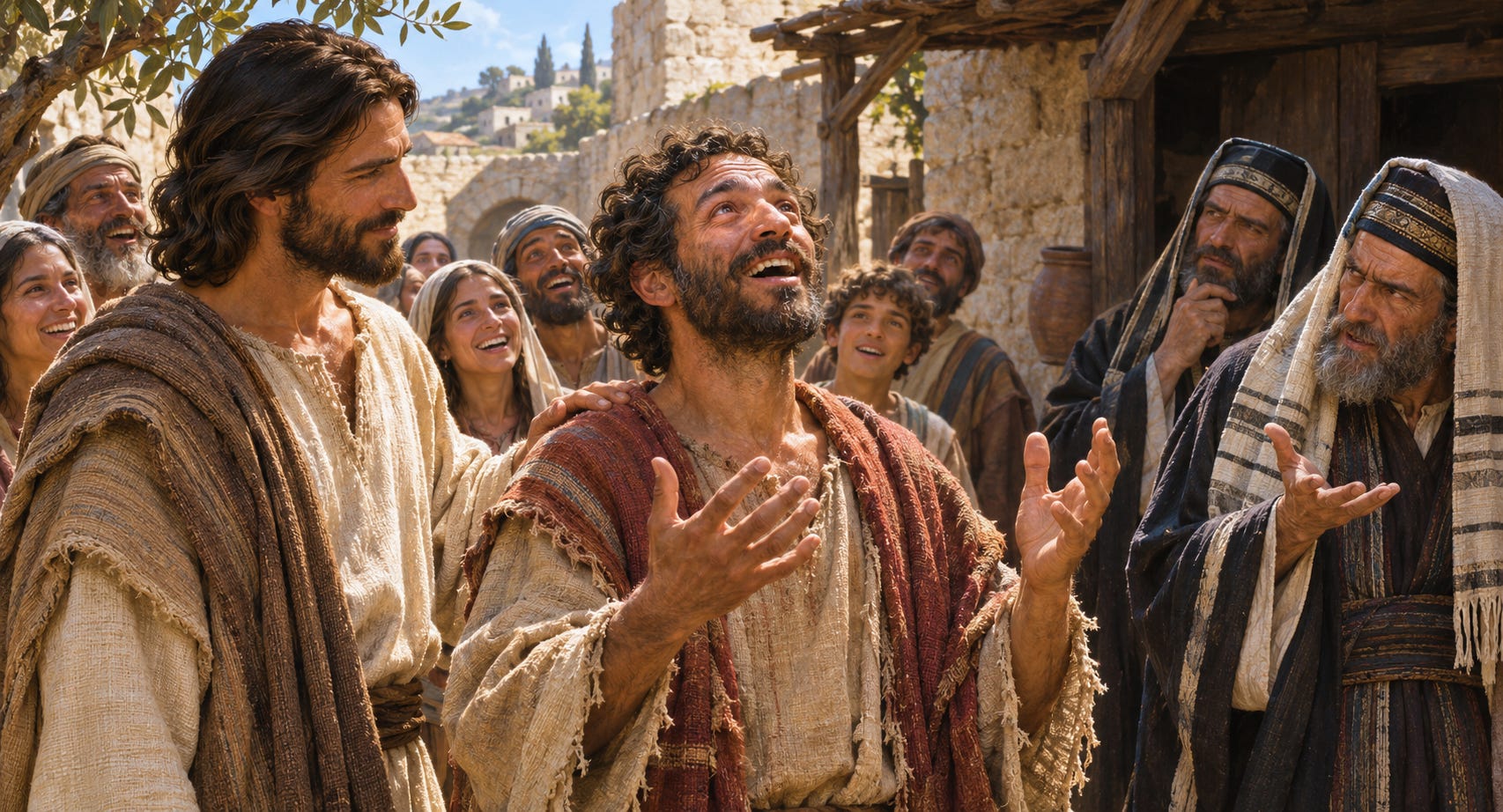
The man could see and speak. He had been brought to Jesus blind, unable to speak, and possessed by a devil. Jesus healed him, and the people began asking whether this could be the Son of David. The Pharisees offered another explanation: He was casting out devils by Beelzebub, the prince of devils.
A man had been freed from the enemy, and they accused his Deliverer of working for the enemy.
Jesus answered their accusation. A kingdom divided against itself would fall. If Satan was casting out Satan, his own kingdom was coming apart. Their explanation could not account for what had happened. Jesus brought the matter directly before them: if He cast out devils by the Spirit of God, the kingdom of God had come upon them.
They were calling God’s deliverance the devil’s work.
That was the setting of His warning about blasphemy against the Holy Ghost. Mark expressly connects it to their claim that Jesus had an unclean spirit. The accusation reached beyond the man’s healing to the source of the power that had healed him. They had taken the Spirit’s work and called it evil.
Jesus also spoke of forgiveness in that warning. Sins and blasphemies could be forgiven. Speaking against the Son of man could be forgiven. Those words belong beside the warning; otherwise, someone may hear only that he once said something terrible and must now spend the rest of his life beyond mercy.
Paul’s life would later show how far mercy could reach. He had been a blasphemer and a persecutor, opposing the very Lord he would come to proclaim. His past was real, and so was the mercy he received. The former opponent became a witness.
His refusal did not remain his final answer.
The warning can be understood as a hardened rejection of the Spirit’s witness to Christ, carried through to the end. In this understanding, blasphemy against the Holy Ghost is the final refusal of the very Savior through whom pardon comes. The person rejects the offered forgiveness and persists in that rejection until his answer is final.
The Father sent the Son, the Son gave Himself for sinners, and the Spirit bears witness to Him. These are not competing offers with different terms. Rejecting the Son does not uncover another pardon behind Him.
Some people pursue one anyway. They trust their own goodness, religious effort, or another road they believe will carry them into heaven. They may acknowledge guilt while believing they can settle it themselves. Others see no guilt that needs forgiving and no judgment they need to face. A discussion about pardon seems irrelevant to someone convinced he has nothing to answer for.
Dismissing the debt does not settle the account.
There are also people who leave the question for another day. Life stays busy, other matters seem more pressing, and tomorrow appears to offer plenty of room. They may never openly declare their rejection. The invitation simply remains unanswered, and an unanswered invitation remains unaccepted.
These positions differ, but none supplies what Christ supplied at the cross. Personal goodness cannot purchase forgiveness. Another religious path cannot replace His sacrifice. Disbelief in judgment cannot abolish it. Persisting to the end in another supposed avenue—or insisting no pardon is needed—leaves the person without the forgiveness offered through Christ.
There is no alternative pardon outside Him.
Faith does not pay for that pardon. It receives the Savior who paid for it. Someone turning to Him for mercy is therefore doing something very different from the person determined to dismiss Him. Jesus promised to receive those who come. His warning gives no reason to tell a repentant person that coming would be useless.
God has declared where both roads lead. Human choice cannot rewrite His judgment, and refusing His mercy cannot remove the guilt that needs forgiving. A person can reject the offered pardon; he cannot make that rejection produce a pardon of its own.
Back in that crowd, the healed man could see and speak while the Pharisees explained away his Deliverer. Their accusation allowed them to oppose Jesus while sounding certain of themselves. It could not change whose power had freed the man or turn his deliverance into the devil’s achievement.
God’s mercy stood before them, and they called it evil.
The Savior who gave the warning also gave the invitation. His authority stands behind both. No other road provides what He provides, and no former opponent needs to invent another road when Christ receives those who come.
“All that the Father giveth me shall come to me; and him that cometh to me I will in no wise cast out.” —John 6:37
—Jeff Wager
#WagerEssays #TheEssayDepot #WhatGodSays #Apologetics #Theology