
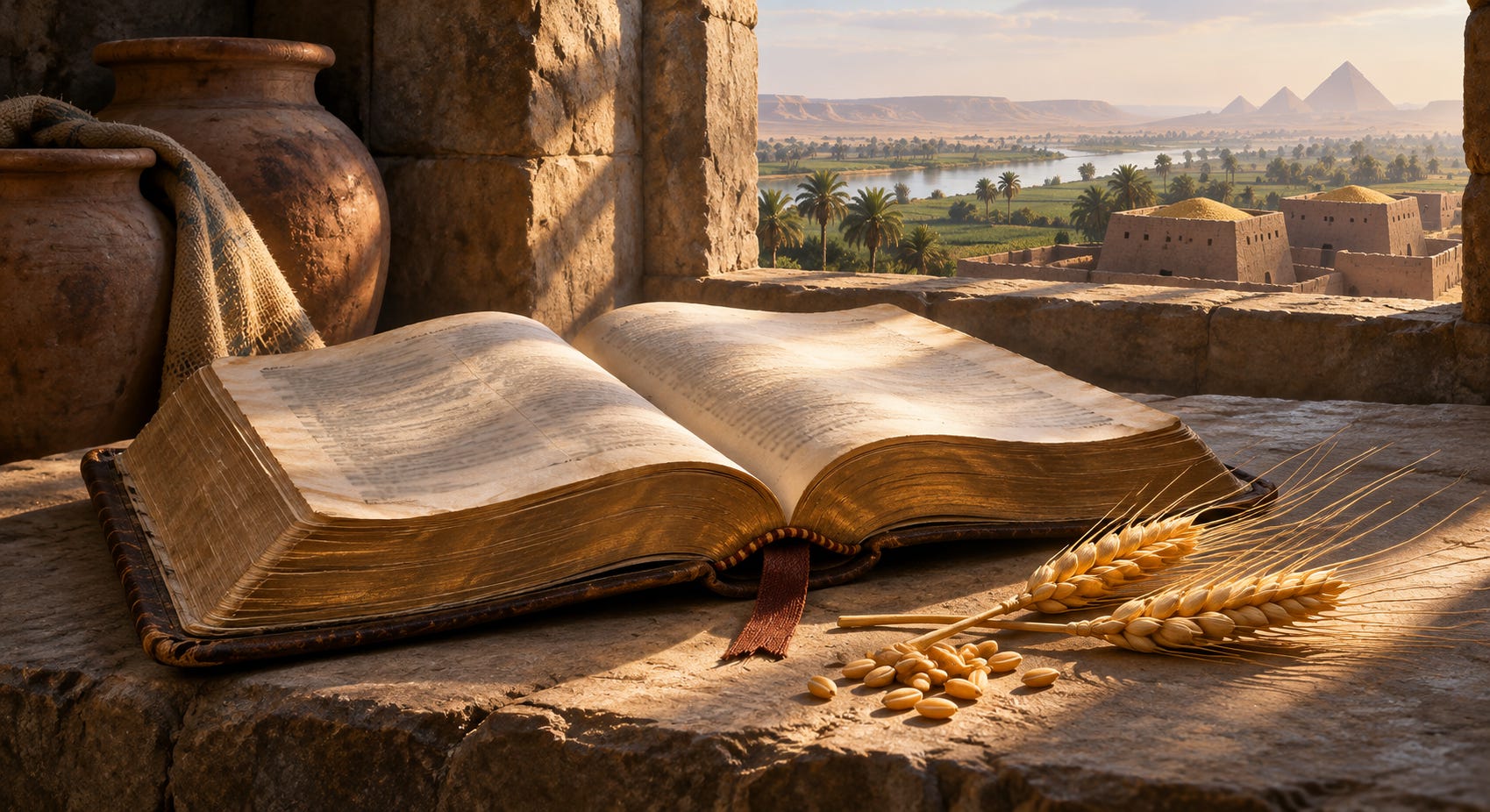
When Joseph’s brothers sold him, they figured they were done with him. Years later, a famine drove them to Egypt to buy grain. They bowed before the man who had charge of the grain without knowing he was the brother they had sold. By the end of the story, Joseph could look those same men in the eye and tell them what had happened. They had meant to do him harm. God had meant it for good, to save many lives. You can read both purposes in the same verse (Genesis 50:20).
That’s the kind of thing I’m pointing to when I talk about The System of Divine Contrast. On What God Says, I tell the stories of Scripture with three truths in view. God rules over all creation. People make real choices within the bounds He sets. When God puts the truth before us, we have to answer, and He has already told us where each answer leads. I call those three pillars Absolute Sovereignty, Bounded Free Agency, and the Requirement of the Verdict. They run through the work from Genesis to Revelation. You can see them in what people do, what God does, and what follows.
Paul says God works all things according to the counsel of His own will (Ephesians 1:11). Go back to Joseph for a minute. His brothers could sell him. They could take his coat home and let their father think he was dead. They had that much freedom, and they used it. Yet the brother they sold was the very man God would use to keep their families alive. They had a hand in what happened, and God had the last word on what came of it.
Peter holds those same truths together when he speaks of the cross. He tells the crowd that Jesus was handed over according to God’s plan, and he holds the people who crucified Him responsible for what they did (Acts 2:23). The Westminster Confession puts both truths side by side as well. It affirms God’s sovereign decree, affirms the reality of human willing, and makes clear that God is never the author of sin. The words I use on the site are my own. The truths they point to have been confessed by Christians for centuries.
We see the third pillar when Moses sets life and death before Israel and tells them to choose life (Deuteronomy 30:19). Both roads are before them. God has already told them where those roads lead. John brings that same question right to our door when he speaks of Jesus. The one who believes in Him is free from condemnation, and the one who refuses to believe stands condemned already (John 3:18). That’s what I mean by the verdict. We answer for ourselves. God has already declared what follows from our answer.
The historic faith also tells us who it is we’re being called to trust. John opens his Gospel by saying the Word was God, then tells us the Word became flesh and dwelt among us (John 1:1, 14). The Nicene Creed confesses Jesus Christ as “true God from true God” and says He became man for our salvation. The Augsburg Confession, one of the historic Protestant confessions, says that we are justified freely for Christ’s sake through faith. Paul puts good works right where they belong. We’re saved by grace through faith, and as people made new in Christ, we have good work to do (Ephesians 2:8–10). Where sin abounded, grace abounded all the more (Romans 5:20). Our hope rests in what Jesus did for us.
That’s where What God Says stands. Scripture is the final authority for what I publish, and the historic confessions help show how Christians before us understood and expressed these teachings. If a phrase of mine is unfamiliar, start with the passage it points to. Read what comes before it and what comes after it. Watch what the people in the story do and see what God does with it. Then ask whether the words I’ve used help you see what was there on the page all along.
“Jesus Christ the same yesterday, and to day, and for ever.” —Hebrews 13:8
—Jeff Wager
#WagerEssays #TheEssayDepot #WhatGodSays #Apologetics #Theology